Peptides: Hoopla or Healing?

From BPC-157 to bone broth — what the biohackers, the regulators, the quantum biologists, and one very unimpressed neurosurgeon actually think. And why none of it matters if your cellular foundation is bankrupt.
TL;DR
- Peptides are short chains of amino acids — the body's own chemical messengers, signaling everything from tissue repair and hormone output to immune regulation and fat metabolism. Your body produces thousands of them naturally, right now.
- Synthetic peptides have been used in medicine for over a century — insulin is one — but the current wave of injectable and oral peptides being promoted by influencers and prescribed through telehealth platforms is a newer and far less regulated phenomenon.
- Proponents like Dr. Josh Axe, RFK Jr., and Dr. Brian Grimm credit peptides like BPC-157, TB-500, and GHK-Cu with accelerating injury recovery, reducing inflammation, supporting cognition, and reversing some chronic conditions when other interventions had stalled.
- The Biden administration moved 19 widely compounded peptides to the FDA's Category 2 "do not formulate" list — without a documented safety signal — driving a clean, inspected, compounded-pharmacy market underground into the gray and black markets. RFK Jr. is working to reverse most of this. But there's a question worth asking about who benefits from that reversal, and we ask it here.
- Dr. Jack Kruse's counterpoint goes far deeper than "wait for more studies." His argument is structural: most commercially sold peptides are racemates — they contain D-form amino acids the body cannot properly process. Natural peptides have strict light absorption and emission spectra, precise deuterium-to-hydrogen ratios, and specific quantum spin. Manufactured peptides have zero controls for any of these properties.
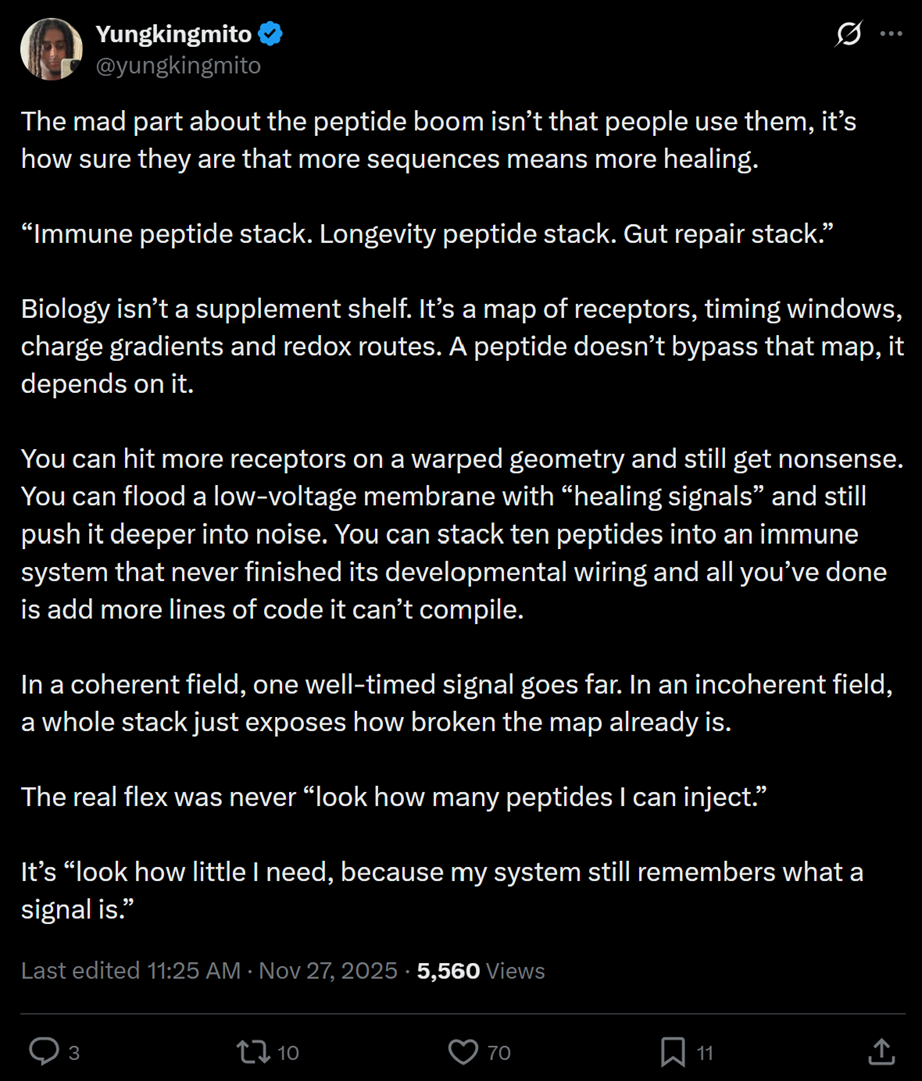
- The coherent field argument — articulated independently by Kruse, @yungkingmito, and Dr. Grimm — is the real challenge to the stacking culture: peptides don't bypass your biology's signaling map, they depend on it. A broken map doesn't get more healing from more signal. It gets more noise. And it can get worse.
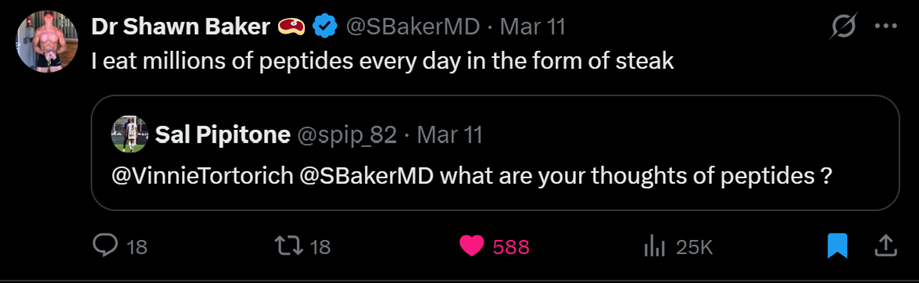
- Dr. Shawn Baker, more succinctly than anyone, cuts through the whole debate: "I eat millions of peptides every day in the form of steak."
- If you're considering any peptide protocol, the question you need answered first isn't "which peptide?" It's "is my cellular hardware actually capable of responding to this signal without causing unintended harm?" Hair Tissue Mineral Analysis (HTMA) can help you find out.
Welcome back to the rabbit hole.

In October 2024, Robert F. Kennedy Jr. posted something that reached 7.2 million people on X. It named peptides specifically — alongside psychedelics, stem cells, raw milk, ivermectin, hyperbaric therapies, chelating compounds, and sunshine — in a list of things the FDA had been "aggressively suppressing." He promised that suppression was about to end.
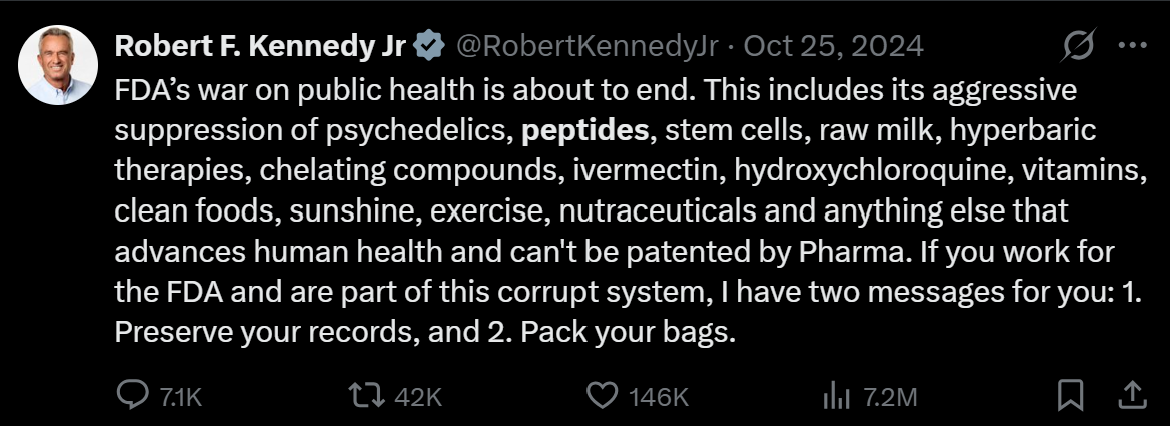
A few months later, as Secretary of Health and Human Services, he was on Joe Rogan explaining exactly how 19 commonly compounded peptides had been quietly moved to a "do not formulate" category by the Biden FDA — without the safety signal that move legally required — and pledging to restore access to most of them.
Whatever you think of Kennedy politically, the pattern this follows is one that Noah Ryan (X: @NoahRyanCo ) put into words in a post that resonated widely:
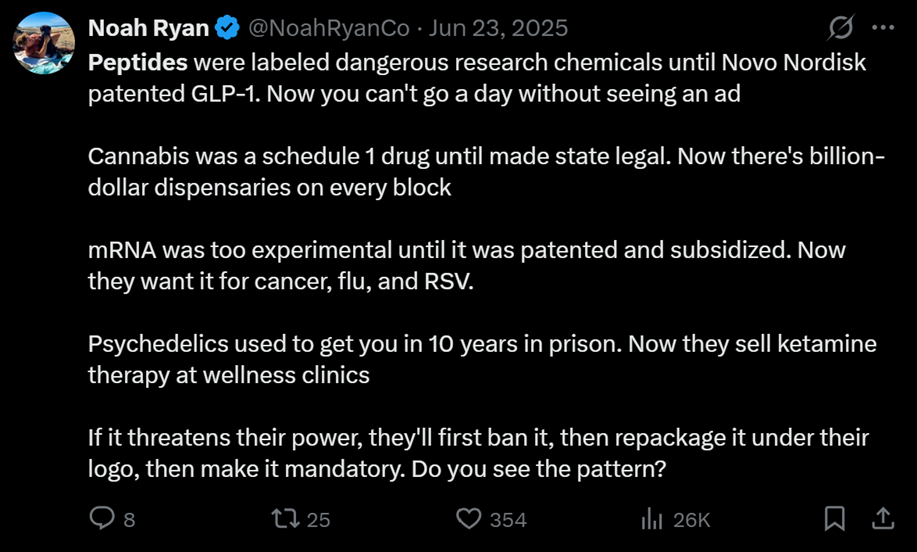
Whether that reads as cynical or accurate is a question you can answer yourself. What it is, unambiguously, is a recognizable sequence.
Let's go in...
What a Peptide Actually Is (And Why You Already Have Thousands of Them)
A peptide is a short chain of amino acids — fewer than 50, generally speaking. String more than 50 together and you've got a protein. String just two or three and you've got a peptide.
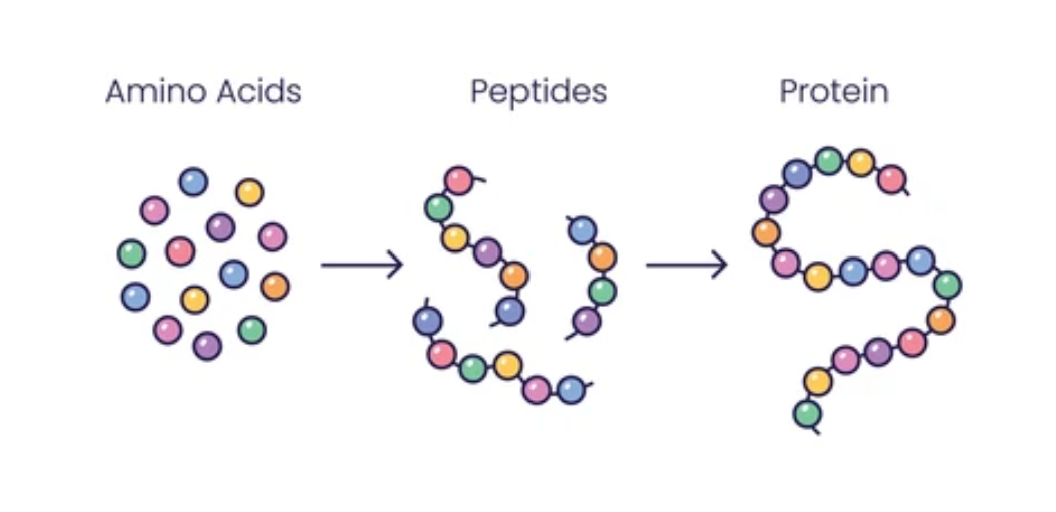
Your body produces them constantly and everywhere. Insulin? Peptide. Oxytocin? Peptide. The hormones that tell your pituitary to release growth hormone, the signals that regulate hunger and satiety, the immune modulators that coordinate your injury response — all peptides. As Dr. Shalender Bhasin of Brigham and Women's Hospital has noted, naturally occurring peptides "are very short-lived. They're degraded very quickly." That rapid degradation is by design — it's how the body maintains signaling precision. Use the signal, clear the signal, reset.
The synthetic peptides generating all the current buzz are engineered to resist that quick degradation. They mimic the body's native signaling molecules but with a longer half-life. That's the promise. It's also, as we'll discuss at length, part of what concerns the skeptics most.
What peptides are not is steroids. They don't flood the body with exogenous hormones the way anabolic steroids do. They work, at least in theory, by nudging the body's own pathways — enhancing natural processes rather than overriding them. That distinction matters biologically, legally, and in terms of side effect profile.
The Proponents: What's Actually Being Claimed
Dr. Ashley Froese, a board-certified primary care physician who operates outside the insurance system specifically so she can talk about things "other doctors just won't," has published a breakdown of 20 of the most discussed peptides that's worth taking seriously because she's neither promotional nor dismissive. On BPC-157 — Body Protection Compound 157 — she describes it as "arguably the most popular peptide in existence" and the compound most associated with accelerated healing of tendons, joints, and gut lining. The animal study literature supporting these claims is substantial, spanning more than a decade of published research (see Cites section at the end of this issue).
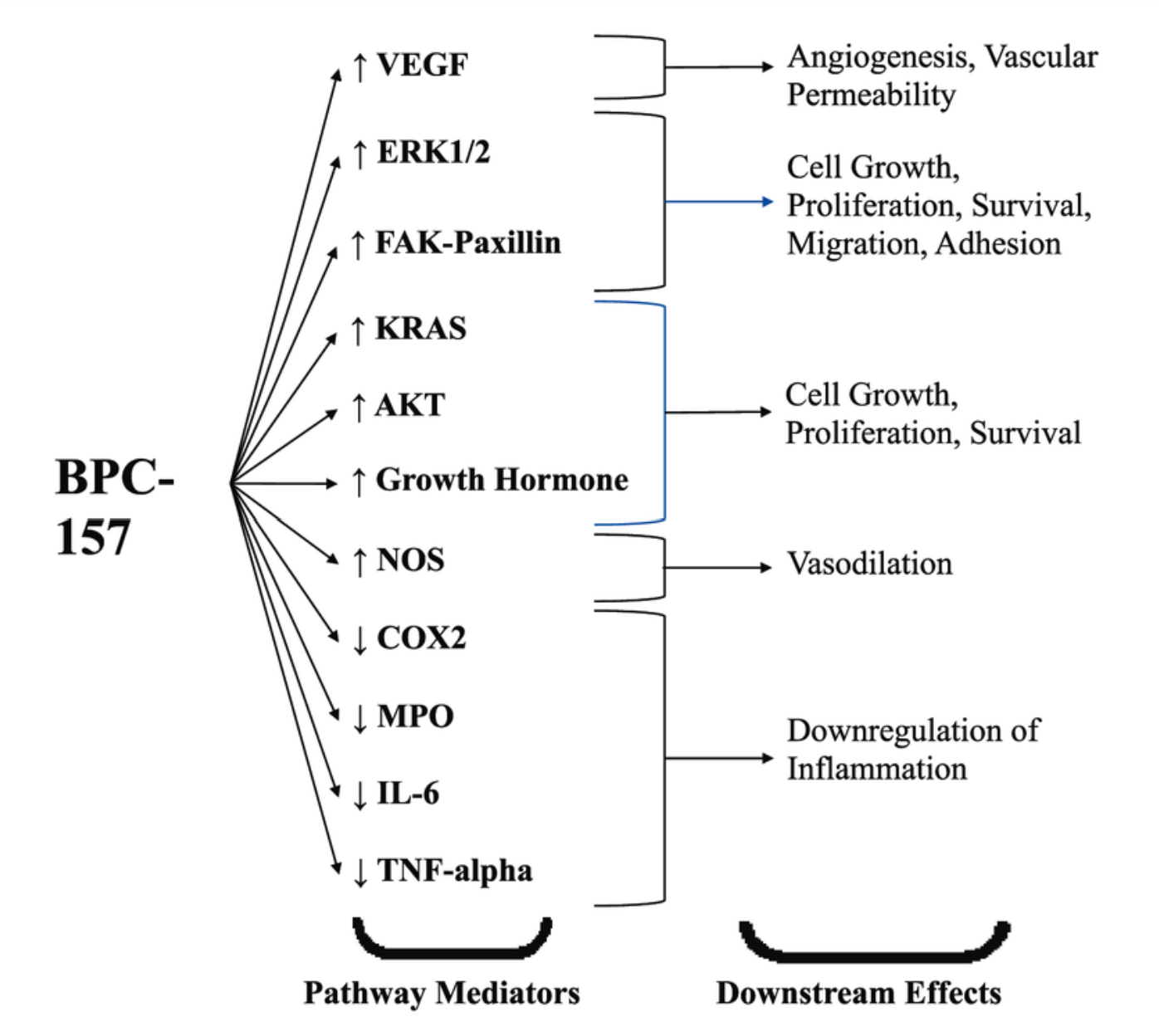
TB-500 (Thymosin Beta-4) is typically discussed alongside BPC-157 as its systemic partner — a full-body healing peptide with documented cardiac repair and angiogenesis applications, with work from Dr. Allan Goldstein's lab covering its wound healing and cardiac recovery applications over two decades of research.
Dr. Josh Axe — a Doctor of Chiropractic and Doctor of Natural Medicine who has worked with elite athletes and served as a nutritionist for the 2012 US Olympic team — makes his case in a clear hierarchy. Diet and lifestyle come first, always. Peptide therapy, in his framing, comes second — a meaningful intervention to consider once food, movement, and basic optimization are genuinely in place. Hormone replacement therapy, if ever needed, comes third and last. He's also grounded in ancestral nutrition logic: organ meats, bone broth, and colostrum from raw dairy are, in his view, your most bioavailable food-based peptide sources. A principle traditional Chinese medicine arrived at thousands of years before any vial existed — eat heart for heart problems, eat liver when detoxification is struggling.
In a reply to Noah Ryan, Dr. Brian Grimm (X: @DrGrimmMD) offers arguably the most nuanced pro-peptide perspective currently circulating on X, framing these compounds not merely as repair agents but as coherence restorers.
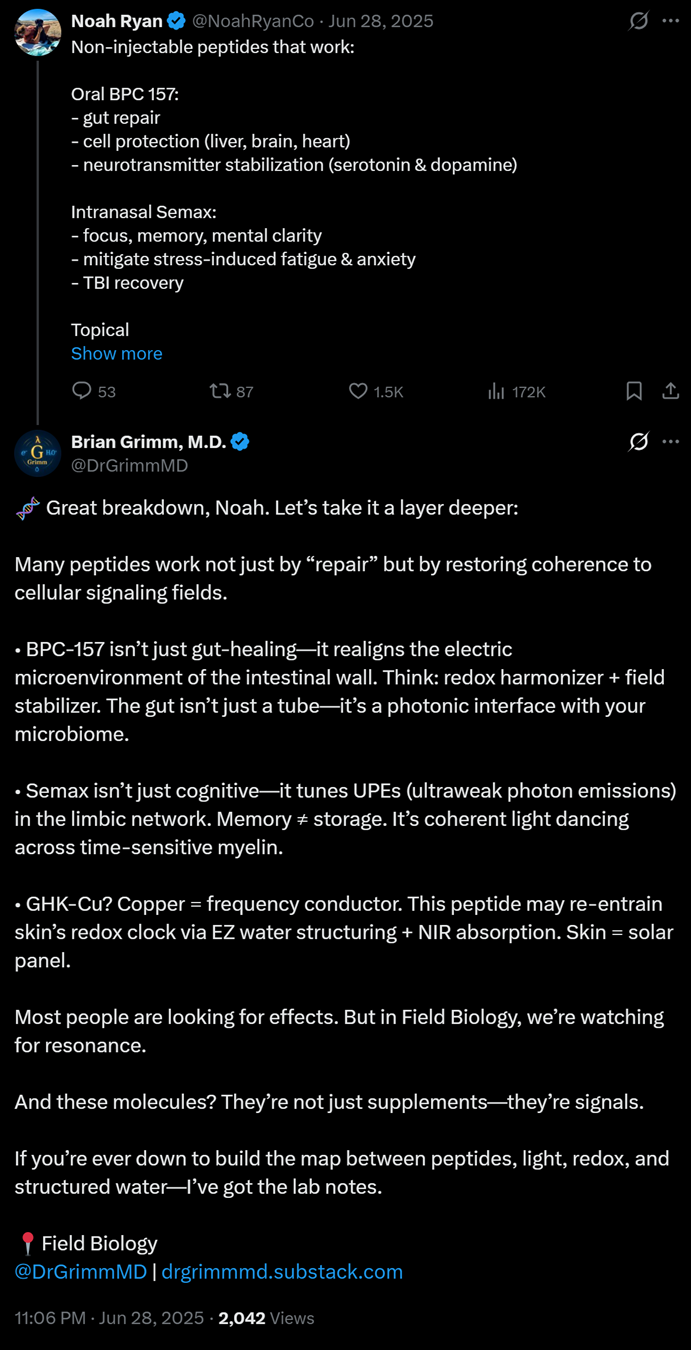
It's a framing that our next voice, interestingly, doesn't entirely disagree with in principle — only in practice. The disagreement isn't about whether these signals exist. It's about whether synthetic versions of these compounds can actually deliver them coherently, or whether they're adding noise to a system that already has too much.

Finding This Information Useful?
Don't miss another dive into the rabbit hole of your health. We cover health topics that reach below the surface to reveal truths often missed in centralized discussions of wellness.
The Regulatory Rabbit Hole: Did the FDA Take These From You on Purpose?
Kennedy laid out the mechanics clearly. There were 19 peptides legally available through compounding pharmacies — including BPC-157, Epithalon, KPV, GHK-Cu, GHRPs, CJC-1295, Semax, and Thymosin alpha-1 — sourced from FDA-inspected facilities and prescribed by licensed physicians for documented patient needs.
During the Biden administration, all 19 were moved to Category 2 — "do not formulate." Under the law, the FDA can restrict compounding on safety grounds only, and that safety concern must be documented. There was no documented safety signal for any of these compounds. The restriction went through regardless.
Demand didn't decrease. It moved underground. The gray market — suppliers selling peptides labeled "for research purposes only" or "for animal use" — stepped into the gap with no quality assurance, no standardization, and no accountability for what's actually in the vial. A Silicon Valley executive with access to deep biomarker monitoring reportedly paused his peptide protocol after detecting elevated levels of micro and nanoparticles he traced to frequent IV infusions — a glimpse at what the gray market's supply chain actually delivers when nobody is checking.
Dr. Randy Seeley at the University of Michigan runs quality control on every batch of research-grade peptides his lab receives from these kinds of vendors. His assessment: not every batch passes — even for cell culture and animal use. The person reconstituting lyophilized powder based on a Reddit thread is working without any of that infrastructure.
Kennedy's stated goal is to restore approximately 14 of the 19 to a legal compounding framework — access from "ethical suppliers" rather than the current alternative. Andrew Huberman has noted on X that the gray market crackdown is beginning and compounding pharmacies "are here to stay." Dr. Cameron Maximus (@DrCamRx) reported that Kennedy indicated the policy shift could happen within weeks.
Which brings us to a question worth sitting with.
An open door — or a regulatory moat?
Restoring legal access to compounded peptides sounds straightforwardly good. And mostly, it is. But consider the architecture of what that restoration looks like in practice. If compounding pharmacies must source from FDA-approved facilities — and pharmaceutical companies are best positioned to become those approved suppliers — what we may be watching is the construction of a toll booth rather than the removal of a barrier. The same compounds, now with Big Pharma as the mandatory intermediary. Access ostensibly restored. Control quietly consolidated.
It's the Noah Ryan pattern on a longer time horizon: ban it, then repackage it under their logo. RFK Jr.'s intentions appear genuine. The pharmaceutical industry's incentives are what they always are. Both of those things can be true at once.
The Case Against: The Racemate Problem and What Kruse Actually Said
Before we go further, a brief introduction for those who haven't encountered him yet — and a reminder for those who have.
Dr. Jack Kruse (X: @DrJackKruse) is a neurosurgeon whose work in biophotonics, quantum biology, and circadian medicine has made him a consistent and often disruptive counterpoint to the mainstream on nearly every topic covered in this newsletter. He operates from first principles and from physics rather than from consensus, which means he's often ahead of the conversation, occasionally infuriating, and almost always forcing a rethink of whatever the centralized narrative has settled on. He's also a Bitcoin foundationalist who has spoken at Bitcoin conferences about time preference and decentralized health — which is partly why he keeps showing up in this orbit. This issue is no different. You'll hear his case in full.
Kruse — who has never in his life softened a position to make it more palatable — has been consistent and unsparing on this subject.
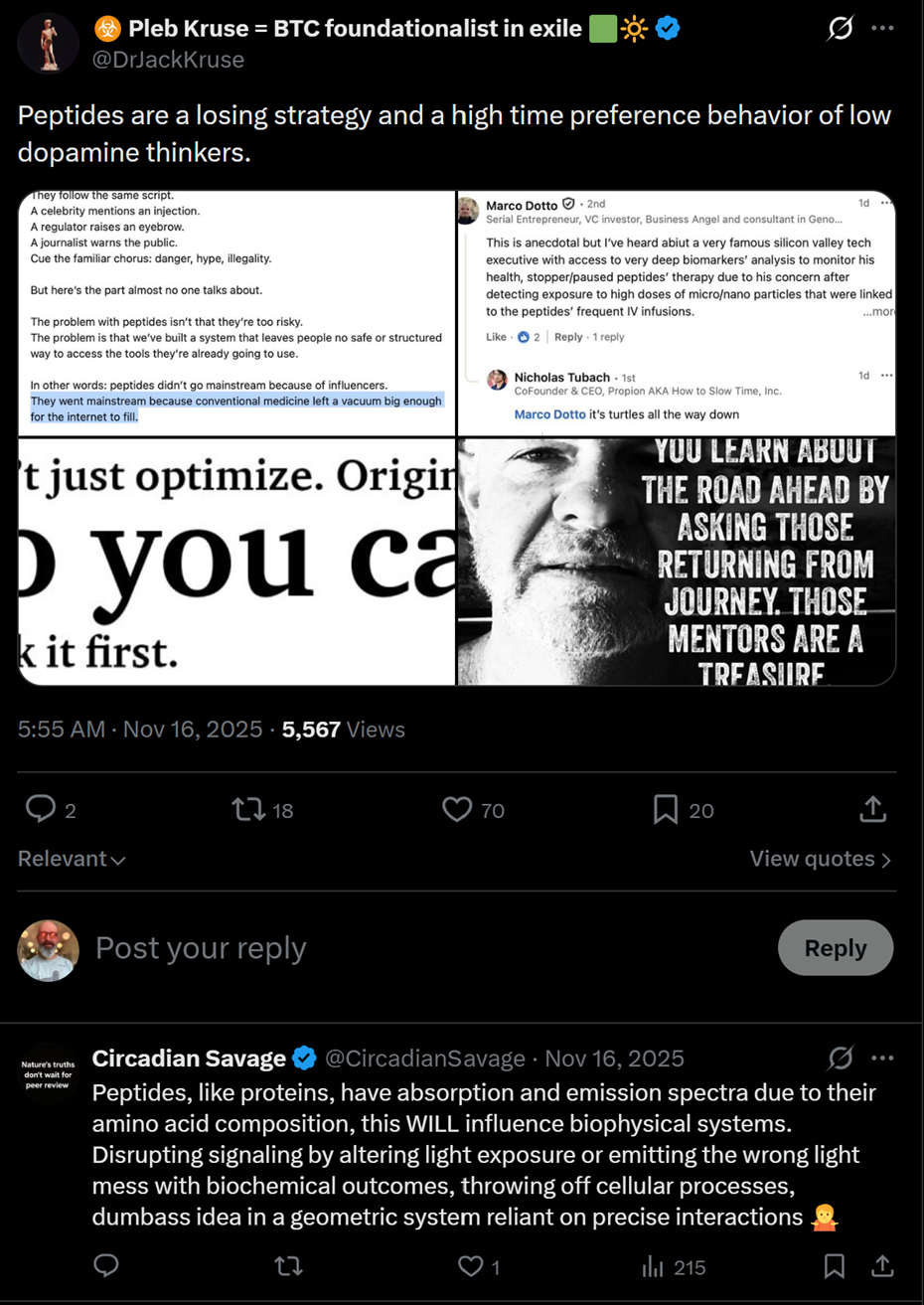
For readers steeped in Bitcoin and Austrian economics, "high time preference" will land immediately: it's the same framework that distinguishes someone spending their sats today from the one holding them for a decade. High time preference means optimizing for now at the cost of later — reaching for the quick fix rather than doing the slower, more demanding work of building a foundation that compounds over time. Low time preference is how you build lasting wealth. In biology, it's how you build lasting health. Kruse is saying that reaching for a peptide before the environmental and metabolic work is done is the biological equivalent of trading your whole stack on a single hyped entry.
That's the rhetorical frame. The technical substance beneath it is more specific and more alarming than the delivery suggests.
The Racemate Problem
To understand Kruse's central objection, you need one concept first: chirality (ky-RAL-ity) — the "handedness" of a molecule, the same way your left and right hands are mirror images of each other that cannot be superimposed. Amino acids exist in two mirror-image forms: L-form (left-handed) and D-form (right-handed). Every biological process in your body — every enzyme, every receptor, every protein — runs on L-form amino acids exclusively. This isn't a preference. It's the foundational handedness of life on Earth.
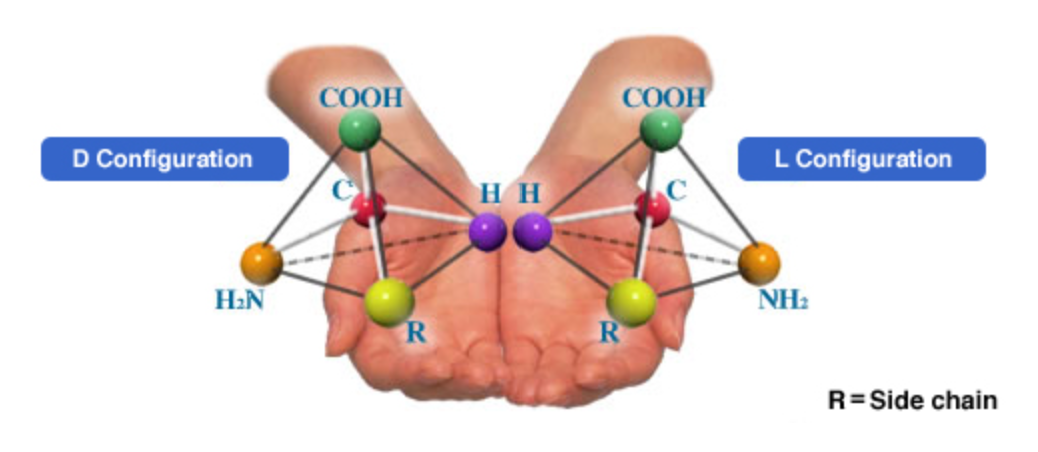
Most commercially produced synthetic peptides are racemates (RAY-see-mates) — mixtures of both L and D forms, because the chemical synthesis process doesn't maintain chiral purity. D-amino acids are, to your biochemistry, effectively foreign molecules. Kruse stated it plainly:
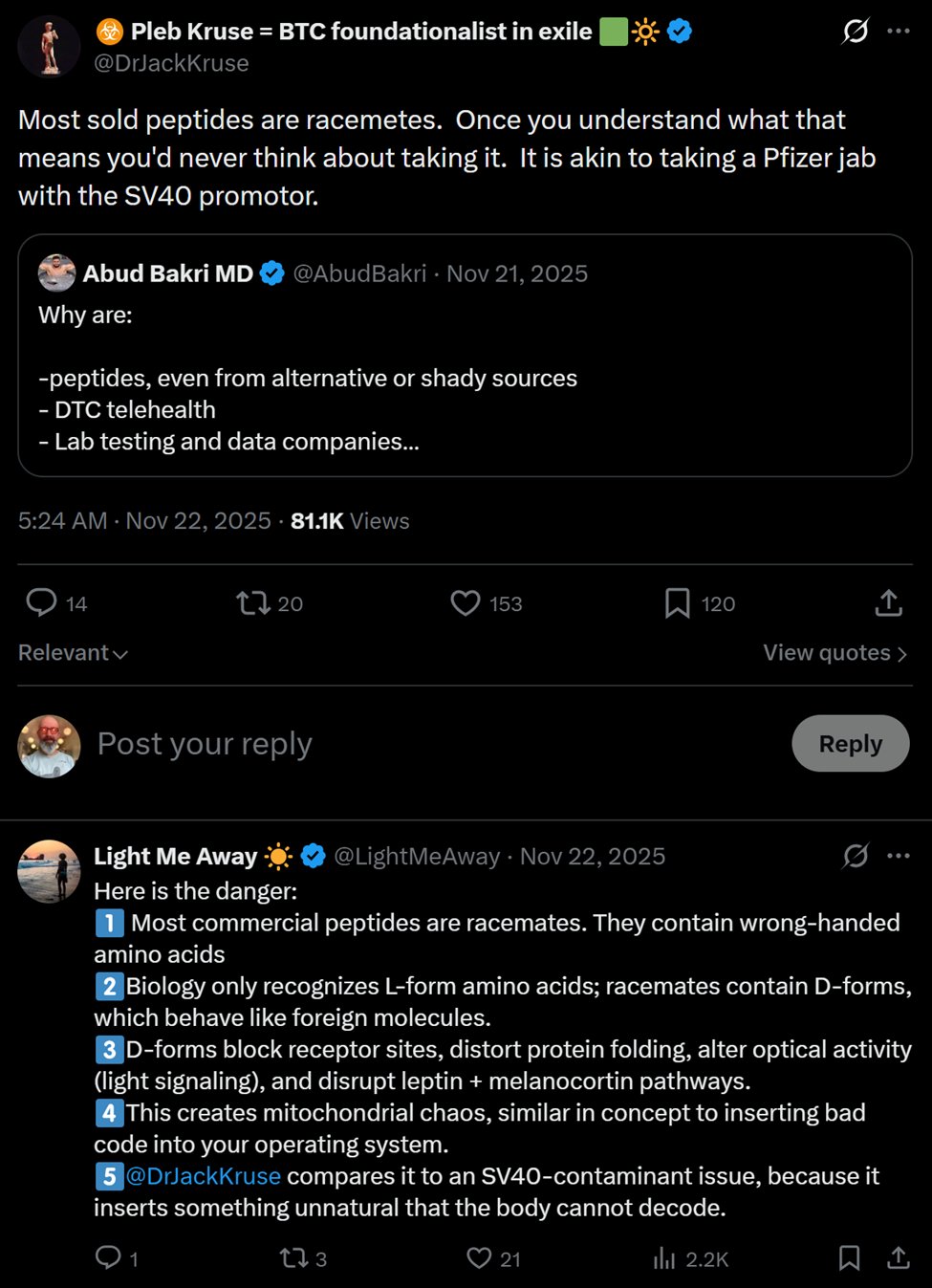
He compared it to the SV40 promoter contamination issue in the mRNA products we covered in a previous issue featuring Kevin McKernan's work — not as casual provocation, but as a structural analogy: you're inserting something the body's machinery fundamentally cannot decode correctly.
The downstream effects, as articulated in a reply thread that spread meaningfully: D-form amino acids block receptor sites, distort protein folding, alter the molecule's optical activity — meaning its light signaling behavior — and disrupt leptin and melanocortin pathways. At the systems level: mitochondrial chaos, similar in concept to inserting corrupted code into an operating system that was running fine before you touched it.
And here's where the concern goes beyond a wasted supplement budget.
Some of Kruse's clients who had been using peptides long-term developed amyloid changes on testing. Amyloid changes refer to the abnormal accumulation of misfolded proteins — the same class of structural problem associated with Alzheimer's disease, where amyloid plaques build up in brain tissue. The connection Kruse draws runs through chiral inversion: Amyloid Beta peptides linked to Alzheimer's can contain D-amino acids through a natural inversion process that alters their aggregation behavior — meaning how they clump and deposit in tissue. When those clients raised this finding with the labs and longevity physicians who had prescribed their protocols, communication shut down entirely.
That's not an acceptable side effect profile. That's a potential harm that nobody prominent in the peptide promotion space is honestly accounting for.

The Quantum Properties Problem
Beyond chirality, Kruse's objection goes further still. Natural peptides, he has noted have strict absorption and emission spectra for light.
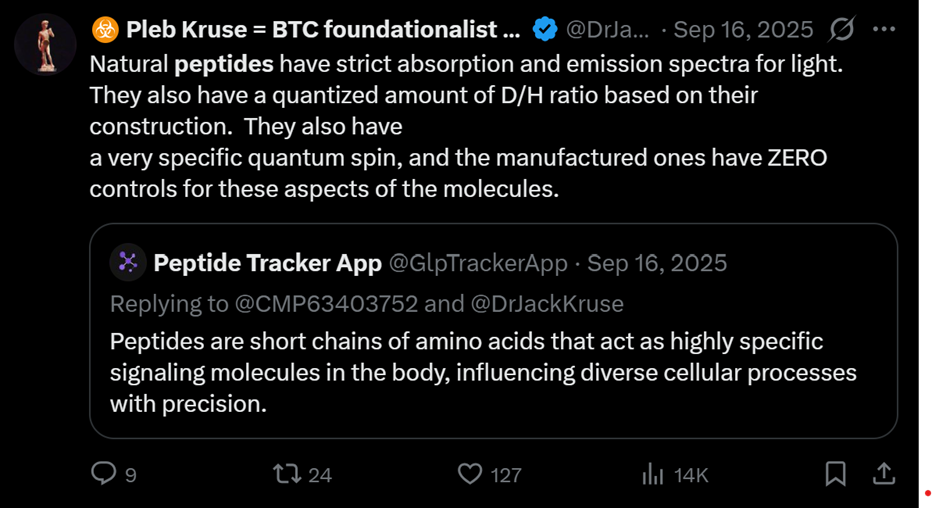
That D/H ratio refers to the proportion of deuterium — a heavier, naturally occurring isotope of hydrogen — to ordinary hydrogen in the molecule. In quantum biology, this matters because deuterium is significantly heavier than regular hydrogen and disrupts the tunneling behavior that drives enzymatic reactions and mitochondrial energy production at the quantum level. He adds: "They also have a very specific quantum spin, and the manufactured ones have ZERO controls for these aspects of the molecules."
That might sound like a stretch toward mysticism — until you remember that every molecule interacts with light according to its structural geometry. Spectroscopy, the branch of analytical chemistry built on exactly this principle, is one of the most validated tools in all of science. A peptide produced by your body operates within a specific electromagnetic context, emitting and absorbing light in ways that are integrated with the body's broader signaling architecture. A synthetic version that controls for none of these properties may carry the right amino acid sequence and still deliver a signal the cellular environment can't receive clearly.
Circadian Savage (X: @Circadiansavage) made the same point directly in his reply to Kruse (see above tweet):
"Peptides, like proteins, have absorption and emission spectra due to their amino acid composition, this WILL influence biophysical systems. Disrupting signaling by altering light exposure or emitting the wrong light messes with biochemical outcomes, throwing off cellular processes."
The Leptin-Melanocortin Argument
In his Bitcoin Historico 2025 talk, Kruse addressed the POMC system — proopiomelanocortin — the single gene that gets cleaved into a cascade of peptides including ACTH (adrenocorticotropic hormone, which drives cortisol production and stress response), alpha-MSH (a melanocyte-stimulating hormone that regulates appetite, metabolism, and skin pigmentation), and beta-endorphin (the body's natural painkiller and mood stabilizer). Together, these govern appetite regulation, stress response, pigmentation, and pain relief through what's known as the leptin-melanocortin pathway — one of the most sophisticated self-regulating systems in mammalian biology.
"Peptides interfere with the leptin-melanocortin pathway, nature's own weight-loss mechanism."
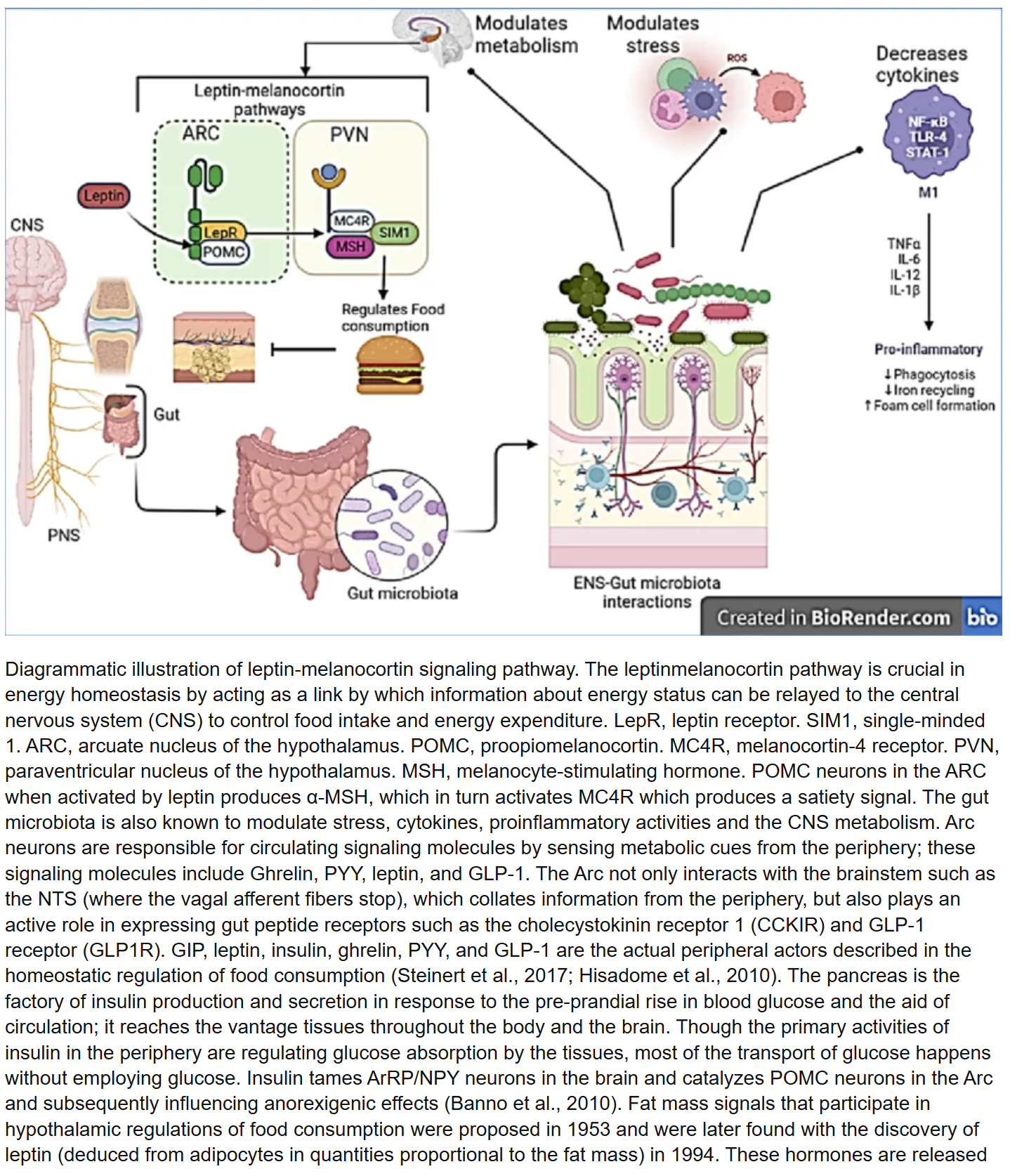
This is not the system you want to introduce noise into while attempting to optimize body composition. It runs on endogenous (from within the body) signals produced in response to light, temperature, and circadian cues — not on exogenous (from outside the body) compounds from a pharmacy or a research supplier. Disrupting it isn't a biohack. It's interference with regulatory architecture that has been refining itself for hundreds of millions of years.
His prescription is environmental before biochemical: fix your light environment, repair your relationship with water and grounding, optimize circadian signaling. Then reassess whether you still think you need to be injecting anything. Most people who believe they need peptides, in his view, actually need to stop living in ways that break their endogenous peptide signaling in the first place. That's the low time preference move. It's slower. It doesn't arrive in a vial with a dosing protocol. And it compounds.
The Coherent Field Argument: Where the Camps Converge
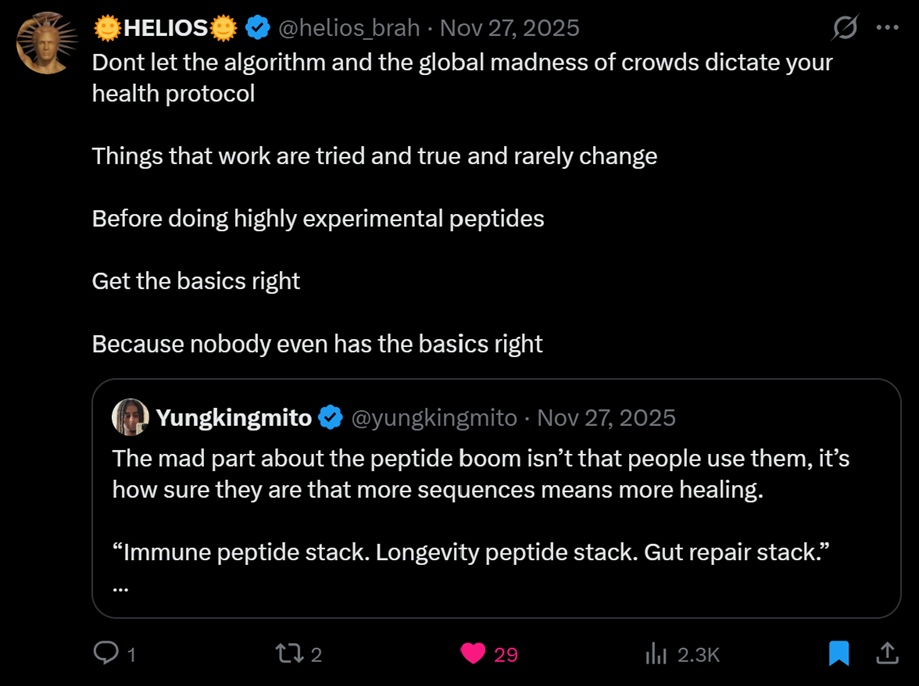
In November 2025, an account called Yungkingmito (X: @yungkingmito) posted something that cut through the debate more cleanly than most of what had come before it:
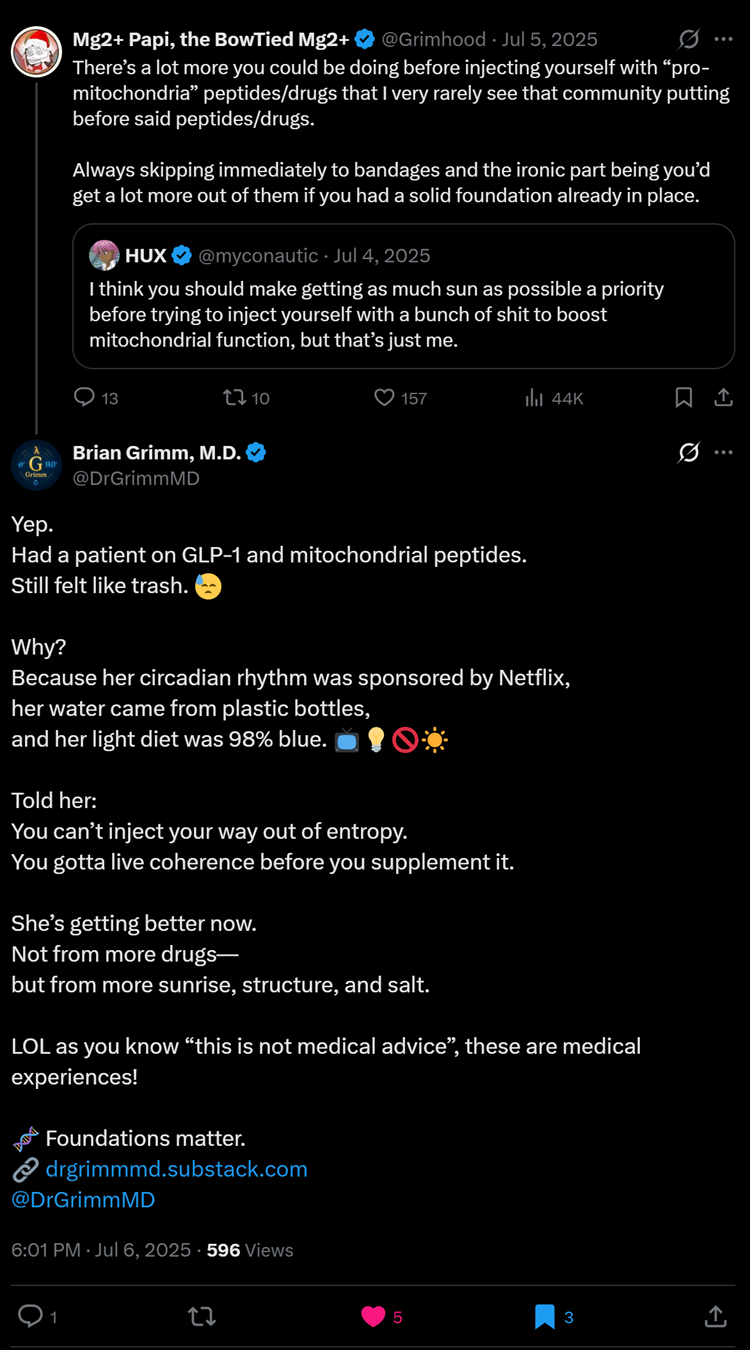
Dr. Grimm echoed this from a clinical direction. He had a patient on GLP-1 and mitochondrial peptides who still felt like trash. Her circadian rhythm, as he put it, "was sponsored by Netflix." Her water came from plastic bottles. Her light diet was 98% blue. He told her:
"You can't inject your way out of entropy. You gotta live coherence before you supplement it."
She got better — not from more drugs but from more sunrise, structure, and salt.
By "structure" he means the daily architecture that keeps circadian rhythms coherent: consistent wake and sleep times, morning light exposure, blue light reduced after dark — the scaffolding that tells your body what time it is at a biological level. By "salt" he means something specific too: sodium is the primary conductor of electrical signals across cell membranes, maintaining the electrochemical gradients that nerve signaling, hormone secretion, and the bioelectric fields underlying peptide signaling all depend on. Adequate sodium, in the right dietary context, is part of the electrical infrastructure the body's signaling systems run on. Sunrise sets the rhythm. Structure honors it. Salt helps conduct it. Think about this the next time a doctor tells you to cut down on salt because of a single reading taken at your physical appointment.
He also offered a warning worth pulling out separately:
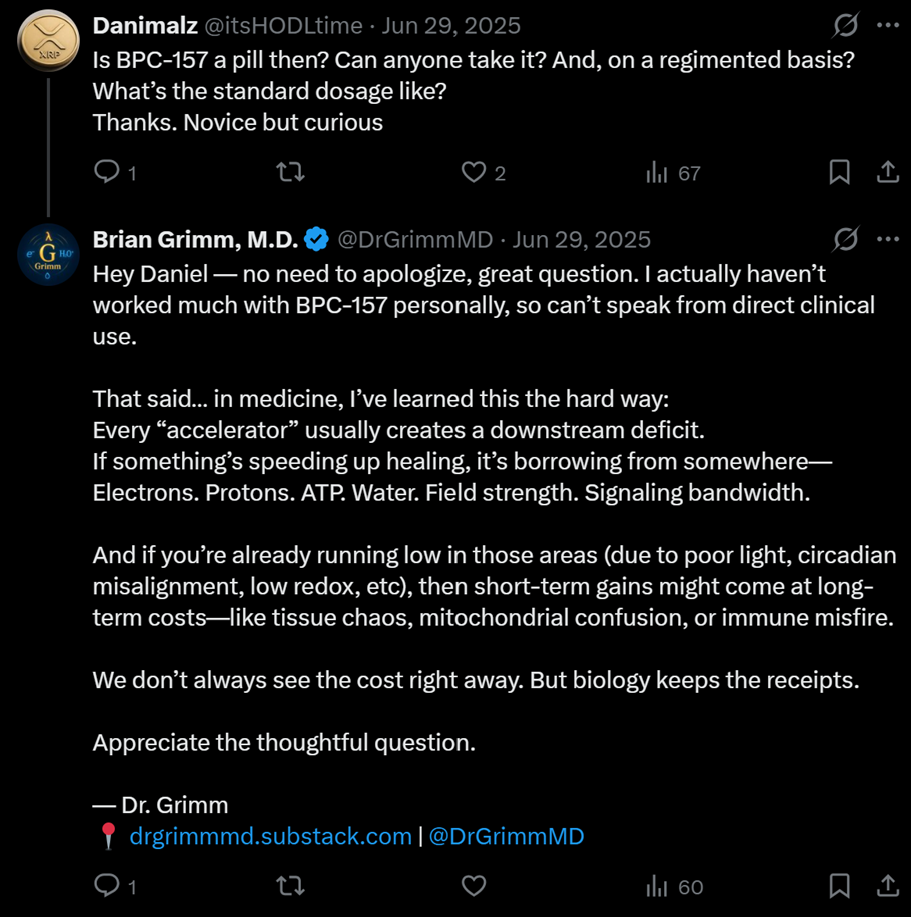
This is the dimension of the peptide conversation that most promotion leaves out entirely.
Deploying a peptide into a broken system isn't just a waste of money and effort — it can actively make things worse. The racemate issue points toward one mechanism: D-amino acid disruption of signaling pathways and possible amyloid aggregation effects. Heavy metal mobilization is another:
🔬 Is Your System Built for This — or Running on Empty?
There is plenty of conversation in the peptide world about which compounds to use, what dose, which protocol. There is almost none about whether the body receiving those signals is capable of using them — or whether it might be made worse by them.
The ARL Hair Tissue Mineral Analysis (HTMA) is how you find out where you actually stand before any of that happens. It gives you a 3-month window into your mineral status at the tissue level — not the blood, where the body compensates aggressively to maintain the appearance of balance. It reveals your sodium-to-potassium ratio (adrenal reserve and energy capacity), your calcium-to-magnesium balance (cellular rigidity and oxidation rate), your zinc-to-copper ratio (the body's capacity to manage the balance between electron-generating and electron-neutralizing processes), and your heavy metal burden: aluminum, cadmium, lead, mercury. It is the test Dr. Jack Kruse specifically endorses while dismissing most of the functional testing landscape as noise. And in the context of peptide readiness, it's the question that needs answering before the question of which peptide.
HTMA with Sleuth Wellness includes practitioner-only access to the ARL lab kit and a comprehensive educational video walkthrough of every marker — $225 total.
No pressure. Just data.
Mail: GeorgeCapetanos@SleuthWellness.com
Subject: HTMA Me — Peptide Ready?
When peptide-driven protein turnover increases mitochondrial efficiency, it can dislodge stored toxins — aluminum, cadmium, lead — faster than the liver and kidneys can process them. And for anyone whose hair tissue mineral analysis shows a depleted sodium-to-potassium ratio — a marker of exhausted adrenal reserve — using growth hormone secretagogues like CJC-1295 and Ipamorelin (compounds that signal the pituitary gland to produce more growth hormone) doesn't stimulate recovery. It pushes a system already running on fumes to work harder, and the bill comes due faster than anyone anticipates. Biology keeps the receipts. The invoice sometimes arrives as a crash that takes months to even name correctly.
Mg2+ Papi (X: @Grimhood) put the foundation-first argument plainly:
Dr. Shawn Baker Has a Two-Word Answer
Somewhere between the injectable protocols and the quantum objections, there is Dr. Shawn Baker, carnivore physician, who cut the entire debate in half :
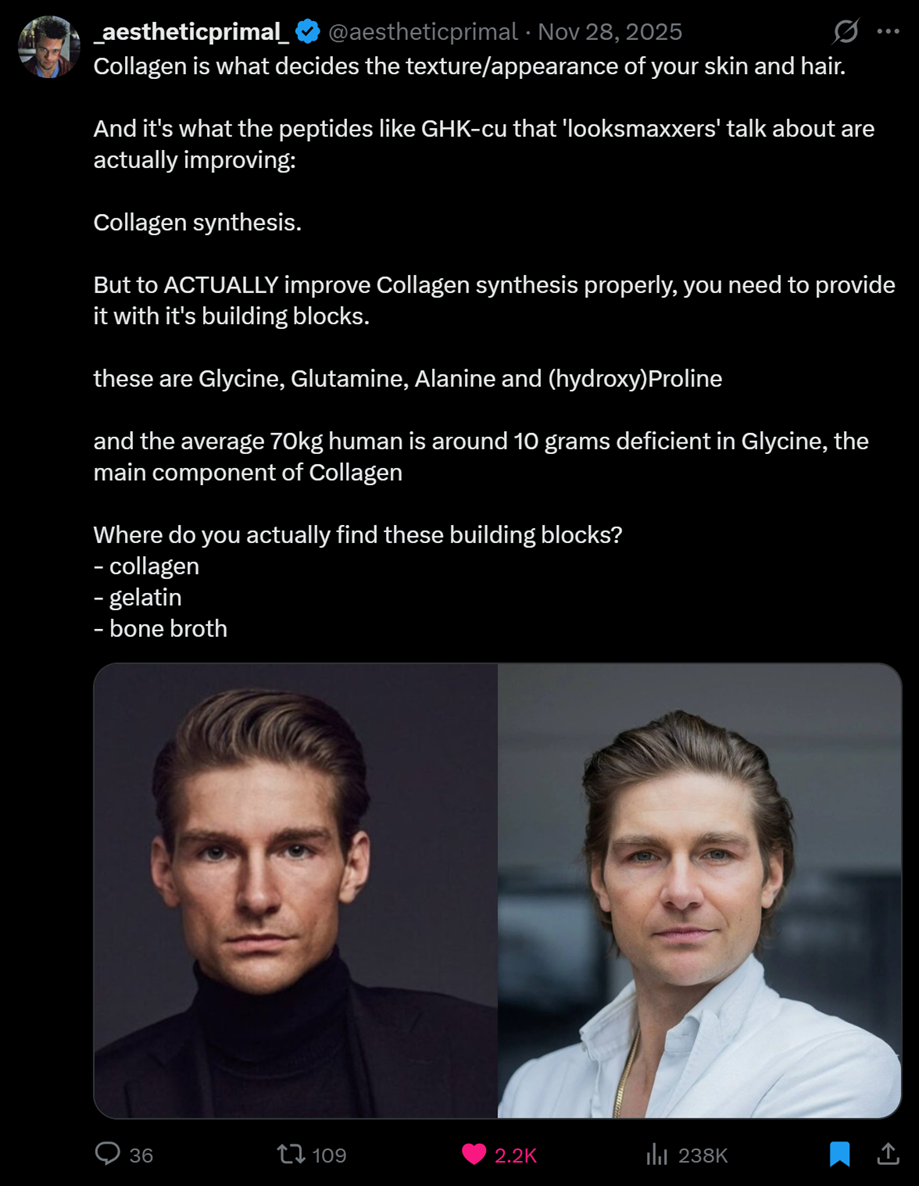
The food-based case deserves more serious treatment than it usually receives. Bone broth is a collagen peptide extract — ligaments, tendons, and connective tissue slow-cooked into bioavailable form. A widely-shared thread from @aestheticprimal made the point that peptides like GHK-Cu that looksmaxxers obsess about are ultimately improving collagen synthesis, and that the building blocks for that synthesis — glycine, glutamine, alanine, and hydroxyproline — are found most abundantly in collagen, gelatin, and bone broth.
Colostrum — the first milk produced after birth — is rich in growth factors and peptides that support tissue regeneration and is among the more bioavailable natural peptide sources for those who tolerate dairy.
HELIOS (X: @helios_brah) said what needed saying:
Michael Morelli (X:@morelifit) offered a practical checklist worth keeping:
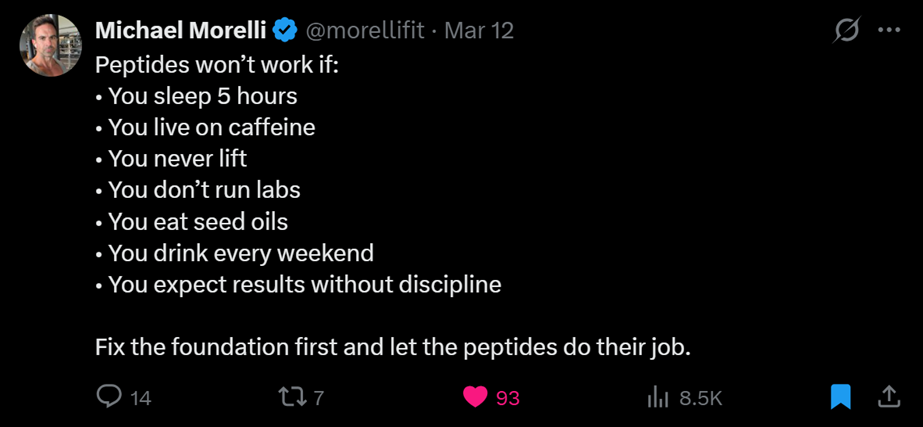
That last sentence is where the honest synthesis lives.
The nutritional substrate — the mineral ratios, amino acid availability, and cellular cofactors that form the working soil your biology grows in — has to be adequate to support the metabolic demand that peptide-driven tissue repair requires. When it isn't, the system doesn't gracefully decline the upgrade. It mobilizes things it was safely storing. It runs the adrenals into the ground. It generates oxidative stress — the cellular equivalent of rust, produced when the balance between electron-producing reactions and the molecules that neutralize their byproducts breaks down — faster than it can neutralize it.
Want to go deeper than peptides?
If you've tried carnivore, keto, maybe even a peptide protocol — and something is still off — you're likely not dealing with a supplement problem. You're dealing with a systems problem. The energy isn't there, the recovery is slower than it should be, the body composition won't budge, the hormones aren't responding. Standard blood panels said everything looked "normal." Everything is not normal.
Sleuth Wellness works with a small number of clients at a time. It starts with functional labs that go where standard panels don't — mapping your mineral ratios, oxidative type, toxic metal burden, HPA-axis status, circadian alignment, UV exposure, nnEMF load, and breathing mechanics against the signals your body is actually sending. Only then does a protocol emerge that's actually yours.
This is what "don't trust, verify" looks like applied to your own biology.
Enjoy a free health strategy session, on me:
If you decide to work with me, my services, excluding lab fees, are 20-40% off when paid in Bitcoin.
Mail: GeorgeCapetanos@sleuthwellness.com
Subject: My Blueprint
The Honest Synthesis
Peptides, then, are not actually hoopla. The research on BPC-157 for soft tissue repair, GHK-Cu for wound healing and skin, and Thymosin Beta-4 for systemic recovery is substantive enough to take seriously even without broad FDA approval for these specific applications. The clinical reports from practitioners who prescribe legally are not anecdotal noise.
But the racemate problem is real, and it is not being honestly addressed in most of the spaces promoting these compounds. If most commercially available peptides are chirally impure — containing D-amino acids the body's machinery cannot correctly process — then "which peptide?" is downstream of the more important question: "what are you actually putting in?" Quality control failures in the research-grade market are a preview of what the gray market delivers more consistently, and the potential consequences run deeper than a disappointing result.
RFK Jr.'s push to restore legal compounding access points in the right direction. Whether it opens a door to genuine access or constructs a more elegant regulatory moat — the same compounds, now with pharmaceutical companies holding the keys to the approved supply chain — is a question worth watching as it unfolds.
Underneath all of it, the coherent field argument holds: a signal sent into a broken receiver produces noise, not healing. The question is never which peptide. It's whether the map is ready to be read.
Cites
- Staresinic M, et al. "Gastric pentadecapeptide BPC 157 accelerates healing of transected rat Achilles tendon." Journal of Orthopaedic Research. 2003. PubMed
- Chang CH, et al. "The promoting effect of pentadecapeptide BPC 157 on tendon healing involves tendon outgrowth, cell survival, and cell migration." Journal of Applied Physiology. 2011. PubMed
- Hsieh MJ, et al. "Therapeutic potential of pro-angiogenic BPC157 is associated with VEGFR2 activation and up-regulation." Journal of Molecular Medicine. 2017. PubMed
- Sikiric P, et al. "Stable gastric pentadecapeptide BPC 157: novel therapy in gastrointestinal tract." Current Pharmaceutical Design. 2011. PubMed
- Goldstein AL, et al. "Thymosin β4: a multi-functional regenerative peptide." Annals of the New York Academy of Sciences. 2012. PubMed
- Pickart L, Margolina A. "Regenerative and Protective Actions of the GHK-Cu Peptide in the Light of the New Gene Data." International Journal of Molecular Sciences. 2018. PubMed
Note: This newsletter is for educational purposes only and is not intended to diagnose, treat, or cure any medical condition. Always consult with qualified healthcare providers regarding any health concerns.
Rabbit Hole Health is published by Sleuth Wellness. Written by George Capetanos. © 2026 Sleuth Wellness