Chlorine Dioxide: NOT Bleach

Is Chlorine Dioxide Another Suppressed Cure-All?
It disinfects city drinking water and it cleared anthrax out of the U.S. Senate, but the moment someone swallows it, the media calls it "bleach." Dr. Pierre Kory says that's no accident, and he has the receipts. The harder question is whether you should ever need it.
TL;DR
- It isn't bleach. Chlorine dioxide is a different molecule from the Clorox under your sink. It has treated drinking water for decades, and it may well be in your toothpaste.
- An ICU doctor's second heresy. After ivermectin cost him his standing in "the system," FLCCC co-founder Dr. Pierre Kory spent two years digging into chlorine dioxide. His book The War on Chlorine Dioxide came out in January 2026. It isn't on Amazon, and he thinks that tells you something.
- The Kory Scale. Kory's rule of thumb for suppressed therapies is to count the attacks. The harder a safe, cheap, widely available compound gets smeared, the more it threatens somebody's franchise.
- What the evidence shows, and what it doesn't. There's strong lab and animal data, 1988 NASA language calling it "A Universal Antidote," and striking reports from Bolivia. There are very few controlled human trials, because regulators restrict the research itself.
- Not a natural protocol. Chlorine dioxide sits outside Functional Diagnostic Nutrition, which reaches for natural antimicrobials first. For an informed individual whose other options have failed, it's an alternative worth understanding.
- The mineral connection. Despite the "Miracle Mineral" branding, ClO₂ isn't a mineral. But every oxidizer draws on mineral-built defenses like selenium, zinc, copper and manganese, and HTMA shows how much you have in reserve.
- The oxygen myth. A pulse oximeter can read 99% while your tissues starve. Carbon dioxide, not oxygen, is what lets your blood release its oxygen, and no bottle fixes over-breathing.
- The better question. Don't ask whether this is another cure-all. Ask why your terrain keeps needing one. Check it with functional labs before you treat it.
Welcome back to the rabbit hole.
In 1860, Ralph Waldo Emerson wrote, "The first wealth is health." Most people reading this have spent years building the second kind of wealth: stacking, compounding and protecting what they've earned, with low time preference and a healthy distrust of anyone who says "just trust us." Far fewer have brought that same discipline to the first kind.
Health has its hype cycles, just like markets. Every so often a molecule shows up promising to fix everything. A few turn out to be real. Most are marketing. And the ones that actually threaten the incumbents draw the loudest, best-coordinated FUD. Ivermectin is still having its moment. DMSO is enjoying a revival. In Nicotine: The Lies You're Told we looked at how a plant alkaloid got recast as a villain. This month's molecule shows up with the biggest halo yet. Here's how one post on X put it just three days ago:
Dr. Pierre Kory, MD: "Chlorine Dioxide Is The Most Suppressed Medicine Of Modern Times." The $30 'Universal Antidote' that kills covid, cancer & deadly pathogens. It emptied hospitals in entire countries and has healed millions. (Joe Tippens, @JoeTippensl, September 26, 2026)
Now compare how Kory himself announced his book in January:
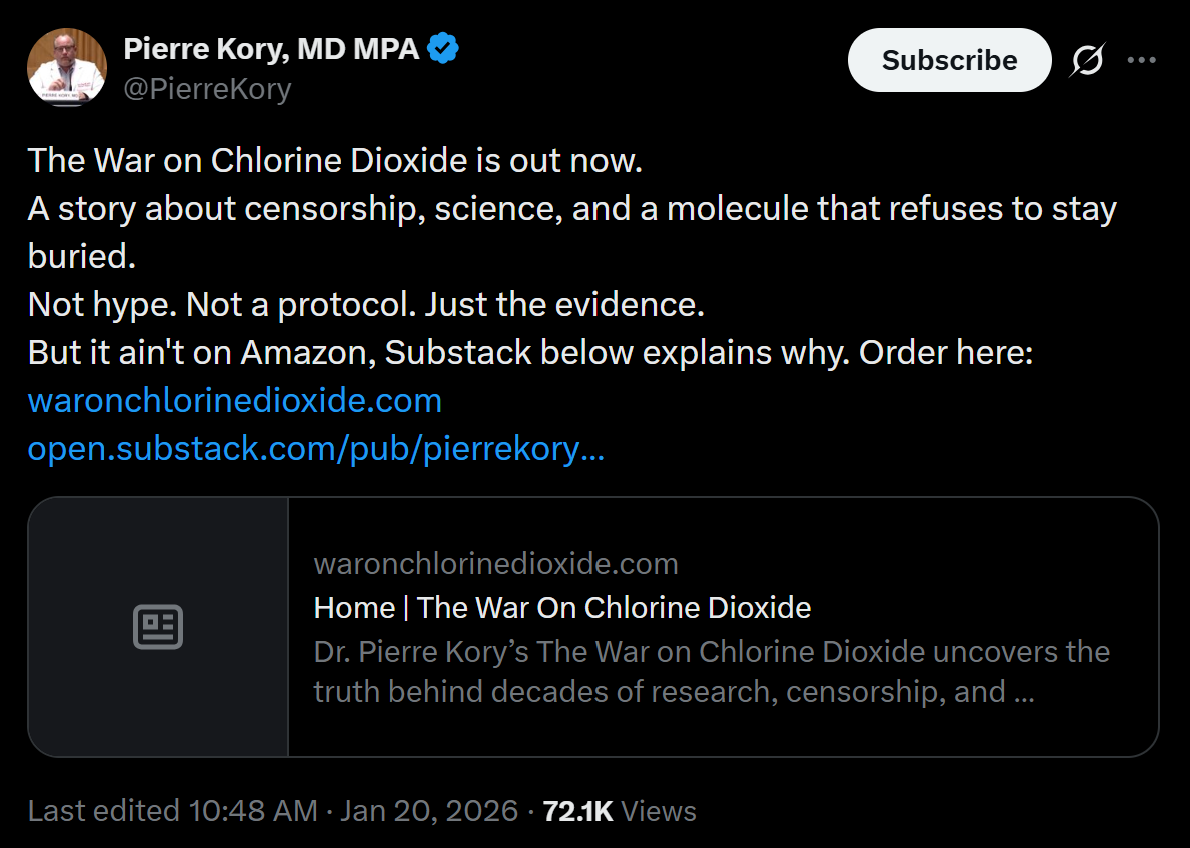
This installment is about the gap between those two posts. We'll go down three rabbit holes together: the history and the suppression, the science as far as anyone can see it, and what a functional nutrition practitioner, a quantum biologist and a breathing coach would each say about swallowing an oxidizer. By the end, I think you'll agree that "Is this another cure-all?" is the wrong question.
(If a friend forwarded this to you, subscribe here so the next one comes straight to you.)
The ICU Doctor Who Started Kicking the Tires
Pierre Kory didn't come from the fringe. He was an academic pulmonary and critical care physician, a narrowly focused specialist who ran ICUs, published research and trusted the system that trained him.

COVID ended that. In a 2025 appearance on Del Bigtree's The HighWire, he described a pandemic response so "illogical" and "devoid of rational behavior" that it forced him to "kick the tires on everything." He watched natural immunity get dismissed through a quiet update to an FDA web page, "and everybody went along with it."
Then came ivermectin. What he saw at the bedside, his "lived reality," contradicted the official story from his first patient on: a woman who had been sick for two weeks with a racing heart and was "transformed" within hours. The pattern kept repeating. The institutions answered with denial and public smears. Kory co-founded the Front Line COVID-19 Critical Care Alliance (FLCCC) to publish treatment protocols built on cheap, off-patent drugs. He describes what followed as a "complete loss of trust in almost every institution of society." He has since publicly accused the investigators of a major trial of hydroxychloroquine in healthcare workers of manipulating their analysis to make a statistically significant finding disappear.
Once a doctor has been branded the "horse de-wormer" guy, he has little reputation left to lose. Maybe that's why Kory walked straight into the next fight. In January 2025 he opened a Substack series with a line that shows how seriously he takes it:
"I believe that my writings on chlorine dioxide are the most important (and the most dangerous) work I have yet done on Substack."
That series became The War on Chlorine Dioxide, co-written with Jenna McCarthy and released in January 2026. It's sold only through waronchlorinedioxide.com. As Kory put it on X, "it ain't on Amazon."
It Isn't Bleach
The media has one line for this molecule, and it's a strong one: people are drinking bleach. It works because, like most good propaganda, it's half true.
Household bleach is sodium hypochlorite, the Clorox under your sink. It's a chlorinating agent. In water it reacts with organic matter, like the decaying leaves and soil that wash into reservoirs, to form chlorinated by-products. The best known are trihalomethanes (THMs), a family of compounds that includes chloroform. The EPA caps them in drinking water, and Kory's own sources describe them as suspected carcinogens.
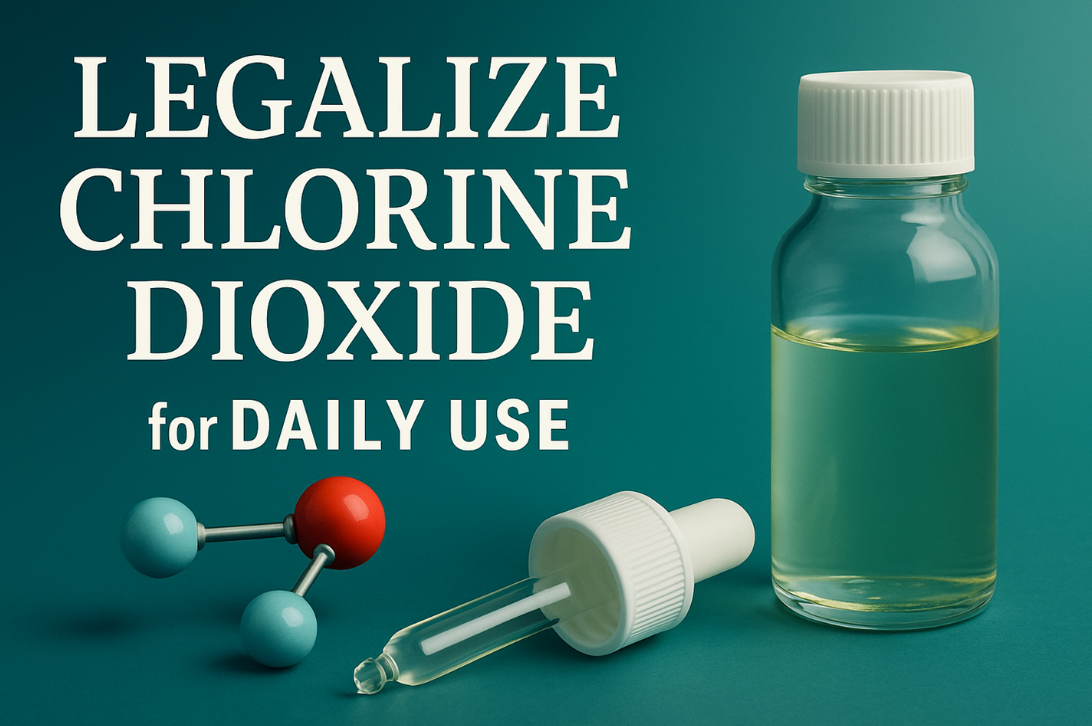
Chlorine dioxide (ClO₂) is a different molecule that works a different way. It's a yellow-green gas that dissolves in water. It doesn't add chlorine to things. It takes electrons from them. That's what "oxidizer" means, and here's the plain-English version of why it matters.
Think of every cell, bacterium and virus in your body as a tiny battery holding some amount of charge. Chemists rate how hard a substance pulls electrons away from other things with a number called oxidation-reduction potential (ORP), measured in volts. The higher the number, the more aggressive the electron thief. Chlorine dioxide sits around +0.95 volts. Bleach chemistry, ozone and hydroxyl radicals sit well above it, roughly +1.3 to +2.8 volts. At that strength they tear into almost anything, including your own tissue.
So chlorine dioxide is actually a weaker oxidizer than the chemistry in bleach, and its proponents say that's the point. It's strong enough to take electrons from structures that can't defend themselves, but not from healthy cells, which hold a strong negative charge and have plenty of antioxidants in reserve. Kory puts it plainly: "relative to chlorine dioxide, all pathogens (disease causing organisms or substances) are electron donors."
Where does it hit? Pathogens and damaged tissue tend to sit in acidic, electrically drained pockets, more like a stagnant swamp than a clear running stream. Chlorine dioxide reacts mainly with four amino acids (cysteine, methionine, tyrosine and tryptophan). Those same amino acids act as structural hinges in viral spike proteins, bacterial membranes and the protein scaffolding of biofilms, the slimy shelters that chronic gut bugs build around themselves. Break the hinges and the structure fails. According to Kory's timeline, water engineers found as far back as the 1950s that ClO₂ strips biofilm out of cooling towers, something he says chlorine bleach "cannot" do. When it's used up in water, chlorine dioxide breaks down first into chlorite and eventually into chloride (the same ion that's in table salt) and oxygen.
A Résumé the FDA Would Rather You Didn't Read
The "bleach" line gets hard to defend once you look at the record. Sir Humphry Davy discovered chlorine dioxide in 1811. By 1944 it was treating drinking water at Niagara Falls. In 1956 Brussels switched its drinking water to it. The EPA registered it as a disinfectant and sanitizer in 1967, for uses that include washing fruits and vegetables and sanitizing food-processing plants. By 1977, thousands of municipal water systems relied on it. In 1983 the EPA recommended it specifically because, unlike chlorine, it doesn't produce trihalomethanes. By 1988 it was registered as a sterilizer for hospitals and labs. It cleared anthrax from Senate offices in 2001, cleared mold from Hurricane Katrina-flooded buildings in 2005, and chlorine dioxide products were on the approved disinfectant list for Ebola in 2014.
In 1988, NASA called it something more. In its annual Spinoff report, NASA called a chlorine dioxide formulation "A Universal Antidote." The report said it could "destroy mold and fungus, as well as bacteria and viruses, with minimal harm to humans, animals or plants," and mentioned human trials against herpes and other sexually transmitted diseases.

Then there's the double standard. When the FDA warned consumers off Jim Humble's "Miracle Mineral Solution," Kory notes, "The FDA repeatedly describes it as industrial bleach while at the same time approving chlorine dioxide for use in mouthwashes, toothpastes, and as a food service disinfectant, citing it as being a better alternative than chlorine."
"Never forget this when you read statements from regulatory agencies across the world where they repeatedly warn that it is a 'toxic bleach,' 'bleach like substance,' and is 'dangerous for ingestion.' Absurd."
The lab and animal data are real. In a 2008 randomized controlled trial, 10 mice were exposed to aerosolized influenza A along with a tiny 0.03 ppm mist of chlorine dioxide, and 10 more got the flu alone. Sixteen days later, none of the treated mice had died. Seven of the ten untreated mice had. "Did you catch that?" Kory writes. "Extremely low doses of chlorine dioxide protected 100% of those mice from influenza." A 2010 study found concentrations of 1 to 100 ppm inactivated at least 99.9% of viruses within 15 seconds, with roughly ten times the antiviral activity of the sodium hypochlorite in bleach. Kory's list of lab and animal targets includes norovirus, hepatitis A and C, HPV, HIV, rotavirus, E. coli, Listeria, Staph aureus and a string of hospital superbugs.
Here's what an honest reader has to admit. Human clinical trials are, in Kory's words, "artificially few due to the suppression of clinical research using chlorine dioxide." The main thing its strongest advocate is asking for isn't a sales license. He wants the FDA "to lift its restrictions on performing clinical research trials of chlorine dioxide in human diseases." That's an odd request for a supposed cure-all: permission to test it properly.
The Kory Scale: Judge a Molecule by Its Enemies
Why would a regulator block research on a molecule it already permits in your food supply, and that's sold in mouthwash and toothpaste? Kory answered on X in July 2025:
"For decades, the FDA has proclaimed chlorine dioxide is 'deadly bleach' with no medical value. Why? Because it cheaply treats many challenging diseases."
Follow the incentives. Chlorine dioxide can't be patented, can be made from simple mineral salts for pennies a dose, and can't be owned. Something like that doesn't just fall outside the profit pipeline. If it does even half of what's claimed, it threatens the recurring-revenue model of chronic disease management. It's the same reason banks don't advertise self-custody of your wealth.
We've seen this before. In the 1960s, Dr. Stanley Jacob at the University of Oregon Medical School (now OHSU) showed that DMSO, a cheap by-product of wood pulp, crossed skin and membranes, calmed inflammation and could carry other compounds into damaged tissue. The press called it a miracle. In 1965 the FDA halted clinical trials over lens changes seen in lab animals given very large doses. Sixty years later, its only FDA-approved human use is a bladder instillation for interstitial cystitis, approved in 1978. Ivermectin got the "horse de-wormer" treatment. In a Substack post this past August, Kory summarized A Midwestern Doctor's (AMD's) review of his book, which argues that the phrase "toxic bleach" "may have been one of the most effective PR campaigns in modern medical history — right after 'horse de-wormer' at least."
Kory has turned that pattern into a measuring stick he calls The Kory Scale. It applies to therapies that are "safe, inexpensive, and widely accessible (the trifecta that threatens medicine's economic model)." He explains it in his August Substack post:
"The method is simple: you assign points to every suppression and persecution tactic deployed by the institutions of society against the therapy, and the more points, the more effective (i.e., threatening) it is. I proposed different scores for media attacks, negative high impact journal editorials, FDA denials of research, universities and journals publishing trials of the treatments that are designed to fail, doctors who advocate for them losing their specialty certifications, licenses, or jobs (ahem), and, in a number of the cases above, assassinations or assassination attempts on the innovators of such treatments (as I detail in my book around chlorine dioxide and earlier oxidative therapies)."
That "(ahem)" is Kory pointing at himself. In August 2024, the American Board of Internal Medicine revoked his board certifications. AMD (A Midwester Doctor), reviewing Kory's book, calls it "one of the most well documented example[s] of how the medical system colluded to suppress a therapy that threatened multiple franchises." The book covers a surgeon who reported a 99.6% success rate treating 3,000 COVID patients with chlorine dioxide, "only to have his hospital's COVID unit shut down."
Then there's Bolivia. In 2020, amid political chaos, Bolivia legalized making and distributing chlorine dioxide, and the military and universities produced it for the public. Kory devoted a full Substack post to the national program. A widely shared thread summarizing his work says Bolivia finished with one of South America's lowest COVID mortality rates, about 183 deaths per 100,000. That's observational data from a chaotic period, and no single variable can explain it. In a sane system, a signal like that would lead to trials, not bans.
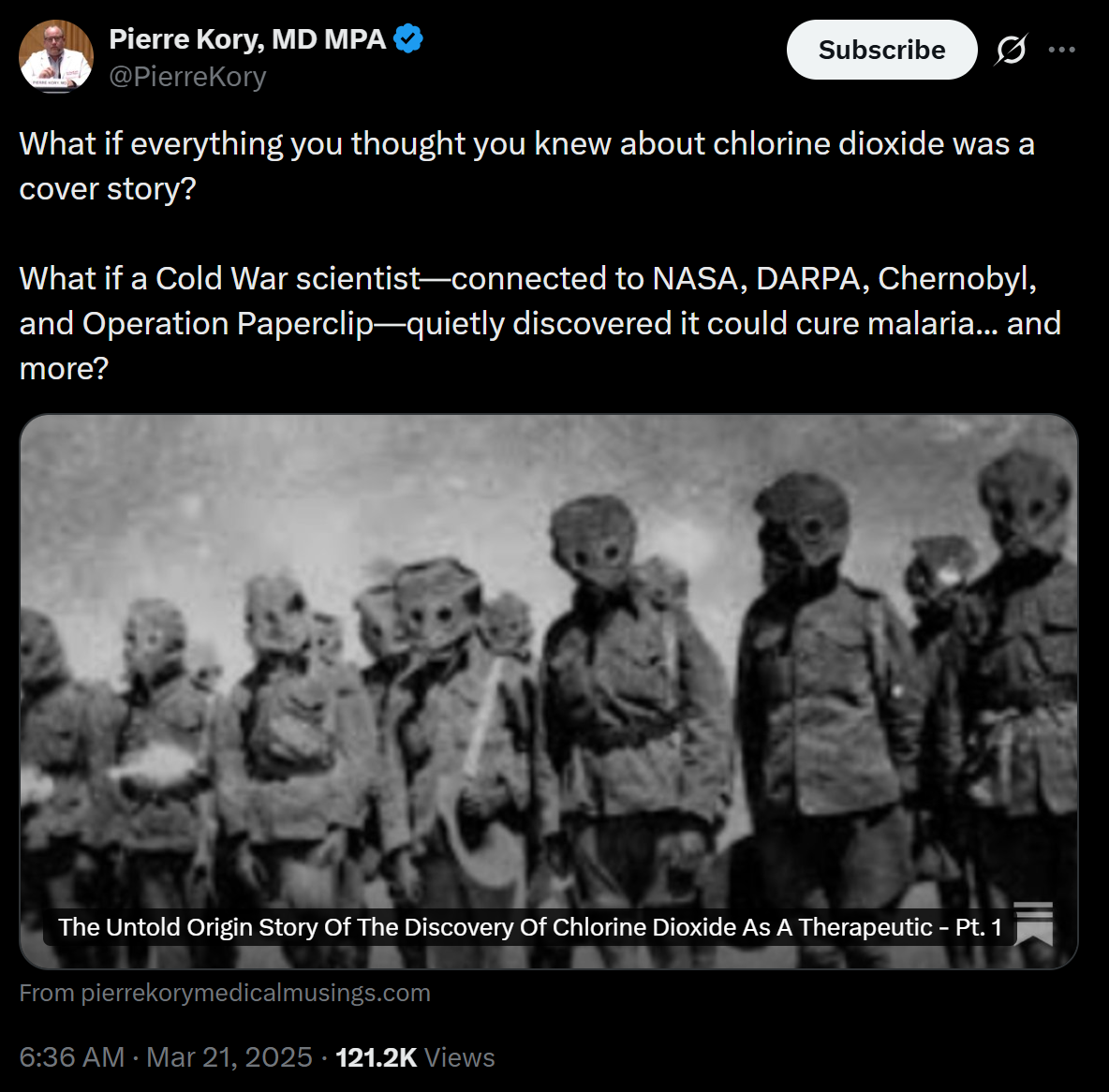
If you want to go further, Kory has written about links between oral chlorine dioxide and Cold War research, including NASA, DARPA, Chernobyl and Operation Paperclip. "What if everything you thought you knew about chlorine dioxide was a cover story?" he asked in March 2025. That one I'll leave to his Substack for now.
From a Prospector's Malaria Kit to a Researcher's Lab
The modern story starts in the mid-1990s in the South American jungle. By his own account, gold prospector Jim Humble treated men on his team who came down with malaria, miles from any clinic, using the only thing he had on hand: "stabilized oxygen," which is essentially sodium chlorite. They recovered. Humble had no training and no lab, and he named his mix "Miracle Mineral Solution" (MMS), a name that did a lot of the FDA's PR work for it (more on the "mineral" part below). MMS means mixing sodium chlorite with an acid activator right in the glass. That does produce chlorine dioxide, but it also leaves unreacted chlorite and acid residue behind, which explains the nausea, vomiting and diarrhea MMS became known for.
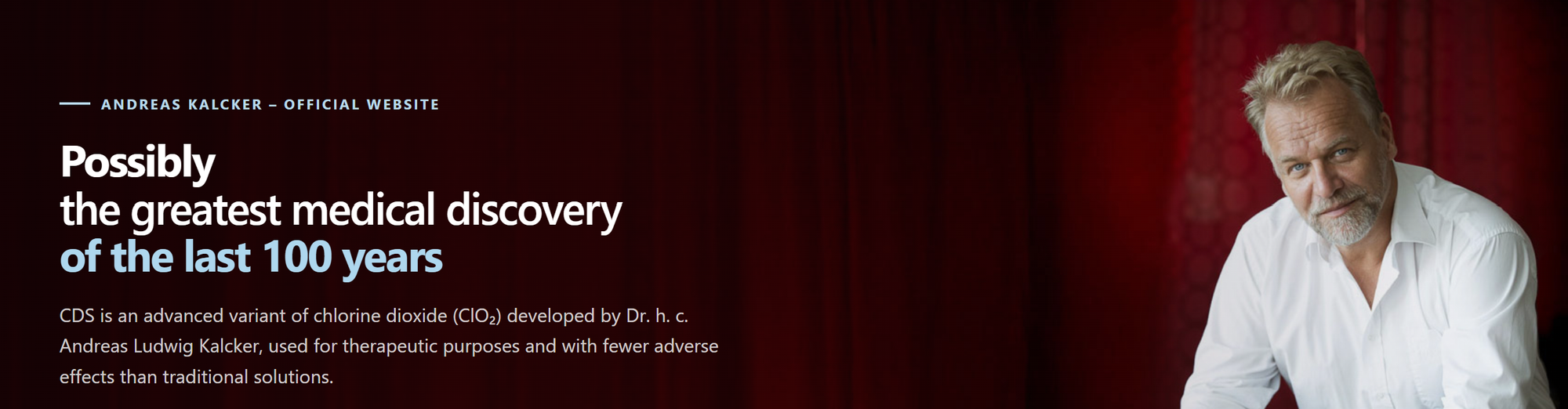
German-born researcher Dr. Andreas Kalcker refined the method. His CDS (Chlorine Dioxide Solution) captures only the chlorine dioxide gas and dissolves it in pure water, without the acid residue, at close to neutral pH. It's gentler on the gut and easier to measure.
As for how people actually use it, the general approach comes from Kalcker's published CDS protocols, not from Kory, who describes his own book as "Not a protocol." In broad strokes, the solution is always diluted in water and never taken straight. It's sipped in small amounts through the day rather than all at once, because the gas breaks down quickly. And courses are short and aimed at a specific problem. It comes either as two-part kits (sodium chlorite plus an acid activator) mixed and diluted at home, or as ready-made CDS, usually around 3,000 ppm, stored cold and dark so the gas doesn't escape. You won't find dosing numbers in this newsletter. Anyone who wants them should go to the primary source, Kalcker's own protocols, and ideally to a clinician who knows their history.
Kory keeps his distance too. Like any physician writing publicly about an unapproved use, he attaches a disclaimer that reads as much like a legal shield as medical advice:
"Please know that I am not recommending that anyone use chlorine dioxide orally given it is not FDA approved for oral ingestion in any medical condition, nor has it been approved by any foreign regulatory agency, nor is it classified as a food supplement."
Read it for what it is: a careful physician protecting himself in a system that has already gone after his credentials once.
What the Critics Get Right
This newsletter questions everything, and that includes our own side.
The FDA's August 2019 warning targets MMS-style kits: sodium chlorite mixed with an acid activator at home. It says drinking them "is the same as drinking bleach" and lists "severe vomiting, severe diarrhea, life-threatening low blood pressure caused by dehydration and acute liver failure." Kory disputes the framing, convincingly. Proponents also argue that much of that gut damage comes from the leftover acid and unreacted chlorite in MMS, which CDS was designed to eliminate. Fair enough, though that's their argument rather than something a trial has shown. And regulators don't draw the line for you: the FDA doesn't carve out CDS, and the UK's Food Standards Agency explicitly extended its warning to include it.
The oxidative risks, meanwhile, travel with the molecule itself, whatever form it comes in. Kory himself points out that NASA's 1991 follow-up warned of hemolytic anemia and disturbed thyroid function. He calls those risks "negligible to non-existent in clinical practice." Anyone with G6PD deficiency, a common inherited trait that makes red blood cells fragile under oxidative stress, should take that warning seriously. And dose matters in any form. The controlled human studies Kory cites found no harm at low drinking-water concentrations, which doesn't automatically cover larger amounts.
The cancer-killing, millions-healed version on X hasn't earned those claims yet. Kory's own case for chlorine dioxide is careful and extensively referenced, and the hype surrounding him often isn't. Keep the two apart.
The "Mineral" in Miracle Mineral Solution
Jim Humble called it a "Miracle Mineral Solution," and the name stuck. Strictly speaking, chlorine dioxide isn't a mineral. It's one chlorine atom and two oxygen atoms, generated from sodium chlorite, a salt made in a factory rather than dug out of the ground. But if you're a mineral person, and I am, the connection is still worth taking seriously, just not the way the label suggests.
Start with where it ends up. Spent chlorine dioxide becomes chlorite and eventually chloride, the same electrolyte that pairs with sodium in your blood and goes into your stomach acid. The molecule's afterlife is a mineral ion your body already manages.
Then look at what it spends. Every oxidizer, and every die-off it triggers, draws on your body's cleanup crew, a team of antioxidant enzymes that can't do their jobs without specific minerals:
- Zinc, copper and manganese run your first line of defense, mopping up the most common free radicals before they damage your cells, including inside the mitochondria, your cells' power plants.
- Selenium lets glutathione, your master antioxidant, defuse the peroxides that oxidative stress leaves behind.
- Iron powers the enzyme that breaks hydrogen peroxide down into plain water and oxygen.
- Molybdenum helps your liver neutralize sulfites (the same preservative found in wine) and other chemical waste that piles up during detox.
If those reserves are already thin, an oxidizer is a withdrawal from an overdrawn account.
The balance matters as much as the amounts. When copper and zinc are out of step, or iron is loose rather than bound up where it belongs, extra oxidative pressure can turn that loose iron into a source of even more free radicals (the Fenton reaction). And some chlorine dioxide by-products, such as chlorate, can compete with iodine for uptake by the thyroid, which may be why NASA flagged thyroid function.
This is exactly what a hair tissue mineral analysis (HTMA) is built to show: your zinc-to-copper ratio, selenium, iron, manganese and molybdenum, sodium and potassium as a window into adrenal output, and the toxic metals that crowd them all out. Whether or not you ever go near chlorine dioxide, knowing your mineral balance tells you how much reserve you have for any kill protocol, herbal ones included. Fund the account before you make withdrawals.
Three Lenses, One Question
Suppose you grant the pro-chlorine-dioxide side everything reasonable: it's not bleach, it's been buried, and it clears pathogens. What happens to you when you use it? Three frameworks give surprisingly consistent answers.
Through the Functional Diagnostic Nutrition lens, the first thing to say is that chlorine dioxide isn't a natural protocol, so it has no place in an FDN program, mine included. We don't diagnose or treat disease. We look for healing opportunities across systems: Hormones, Immune, Digestion, Detoxification, Energy and Nervous system. When the data points to a pathogen or biofilm problem, the FDN toolkit already has natural options: botanical antimicrobials like berberine, oregano oil and allicin from garlic, caprylic acid and monolaurin, and enzyme-based biofilm disruptors, alongside changes to diet and lifestyle.
That said, it pays to understand pharmaceutical allopathy, especially when the compound in question is inexpensive, off-patent and has a decades-long safety record at the low concentrations used in drinking water. And chlorine dioxide is a fascinating one. It's tempting to call it a sledgehammer, but a sledgehammer doesn't choose what it hits. This one is drawn toward the electrically weakest targets and largely leaves the rest alone, more like a heat-seeking missile than a club. For an informed individual whose natural options have failed, that makes it an attractive last resort.
Whatever you use, killing things has a cost, and what follows is true of any pathogen protocol, herbal ones included. When bugs die off in bulk, they release lipopolysaccharides (LPS), toxic fragments of bacterial cell walls. If that debris reaches your bloodstream faster than your liver can clear it, you get a Herxheimer reaction: brain fog, joint aches, exhaustion and nausea. Your body also spends its own antioxidant reserves on the cleanup, starting with glutathione.
The supports are the same whichever route you take. I don't mean "take this for that." I mean scaffolding while you rebuild:
- Binders such as activated charcoal, modified citrus pectin or fulvic/humic minerals mop up debris in the gut. Serum-derived bovine immunoglobulins like MegaIgG2000 bind LPS directly so it leaves in the stool instead of reaching your bloodstream.
- Glutathione building blocks like NAC, glycine and NAD⁺ precursors help your body make its own master antioxidant, which usually holds up better than buying it ready-made.
- Trace minerals, from a broad formula like Pure Encapsulations Minerals 650, keep liver detox pathways and your antioxidant enzymes supplied.
- Timing matters with an oxidizer. Antioxidants and oxidizers cancel each other out, so the two are kept apart during the day.
Through the quantum biology lens, your body isn't just a bag of chemical reactions. It's an electrical, light-emitting network. Building on the work of biophysicist Fritz-Albert Popp, researchers have shown that healthy cells give off ultra-weak light, called biophotons, generated largely by mitochondrial activity. In this model, that light helps cells coordinate with each other. A biofilm or pathogen colony changes the local water structure, drains voltage and adds chaotic free-radical activity, like static drowning out a clear radio signal. Proponents describe chlorine dioxide as an electrostatic reset: oxidize the drained, disordered mass and you cut off the source of the static. Some go further and say the trace oxygen left behind gives the end of your mitochondrial "bucket brigade" (Complex IV) an extra hand to catch spent electrons so energy production can speed up.
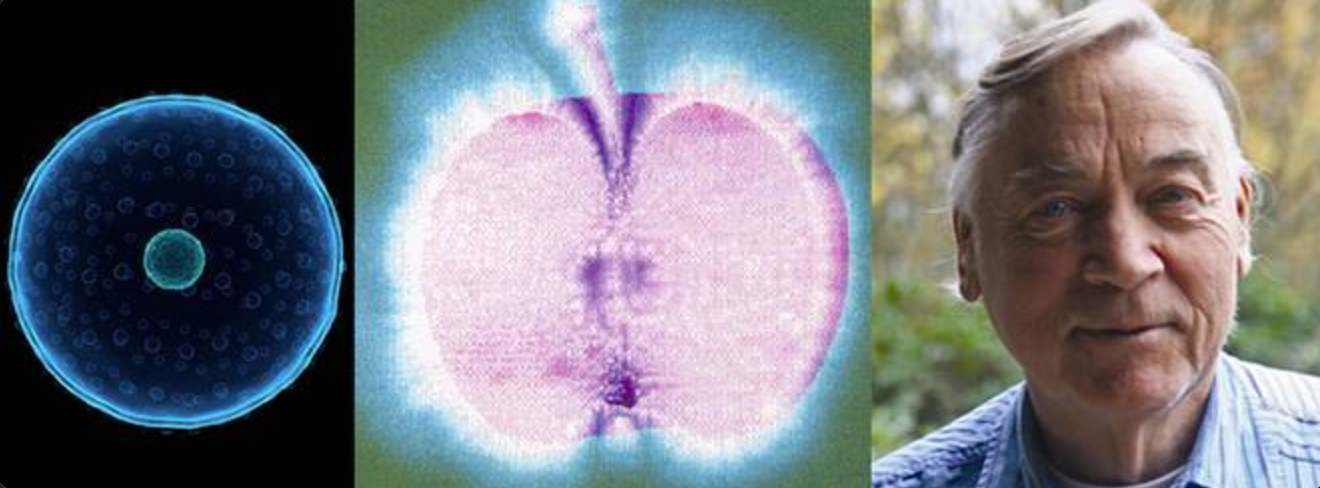
Those are hypotheses, and the oxygen left behind is tiny. The bigger point from this lens is that clearing static isn't the same as sending a signal. Coherence gets built by morning sunlight, UV and infrared, time on the ground, real darkness at night and less non-native EMF in your space. A molecule can quiet the noise. Only your environment provides the signal.
Through the Buteyko breathing lens, the most common claim you'll hear about chlorine dioxide, that it "oxygenates the body," misses the point. Your blood is almost never short of oxygen. Clip a pulse oximeter on a chronically stressed mouth-breather and you'll often see 98 or 99%. Their tissues can still be starving.
Here's why. Think of hemoglobin as a delivery truck that only drops off its load where it smells carbon dioxide. That's the Bohr effect. Over-breathing from stress, mouth-breathing or poor sleep blows off too much CO₂. Your blood shifts slightly alkaline, the truck hangs onto its cargo, and oxygen passes right by the tissues that need it. That's chronic tissue hypoxia, and no oxidizer fixes it. Chlorine dioxide might help clear debris from the road, but only proper breathing mechanics let the truck unload.
That's why Buteyko's Reduced Breathing, which means light, slow, nose-only breathing, works on CO₂ tolerance rather than oxygen. Athletes take it further with breath-hold drills that briefly create controlled low-oxygen, high-CO₂ conditions. That pushes the kidneys to release natural EPO, raises red blood cell counts and trains hemoglobin to release oxygen under load. They break plateaus by getting comfortable with more CO₂, not by gulping more air. You can check where you stand tonight with the Control Pause: a relaxed breath out, then count the seconds until you feel the first clear urge to breathe.
Even your food feeds into this. Burning carbohydrate produces more CO₂ per unit of oxygen than burning fat does, which is one reason your metabolic type matters as much as your macros. Shellfish like oysters and mussels supply the zinc your body needs for carbonic anhydrase, the enzyme that balances CO₂ and bicarbonate in your blood. Bivalves are low in mercury, but oysters can carry cadmium, which is another thing a tissue mineral test can show you.
Everyday Problems You Actually Have
Nobody wakes up thinking, "I really need to balance my systemic oxidation-reduction potential today." People wake up with problems that need solving now:
- Bloating after meals that makes buttoning your pants miserable.
- Brain fog that makes running your business or keeping up with your kids feel like wading through wet cement.
- Waking at 3:00 AM.
- Low libido or signs of low testosterone. For women: irregular or heavy cycles, worse PMS, breast tenderness, stubborn weight on the hips and thighs, anxiety and low mood.
Here's the honest way to match those symptoms to chlorine dioxide. Bloating driven by dysbiosis, candida or biofilm is where a strong antimicrobial has its most plausible role. Brain fog can come from endotoxin leaking through a permeable gut, but it just as often comes from blood-sugar swings, mineral depletion or over-breathing. The 3 AM wake-up is usually a blood-sugar and cortisol story, with an overloaded liver in the mix. The hormone symptoms have their own roots in mitochondria, minerals, thyroid and the HPA axis. And oxidizers aren't friendly to a thyroid that's already struggling.
The same symptom can have four different causes. A cure-all can only guess which one is yours, and you don't have a chlorine dioxide deficiency.
🔬 DON'T TRUST THE BOTTLE. VERIFY THE BODY.
Why functional labs beat standard blood work. A standard blood panel is built to answer one question: are you sick enough yet to diagnose? Its "normal" ranges are averages of whoever got tested, and it's a single snapshot of what's floating in your blood at one moment. Functional labs ask a different question: how well is the system working? They track your hormone patterns through the day (DUTCH), exactly which bacteria, yeast and parasites are living in your gut (GI-MAP), and the minerals your tissues have stored over months (HTMA). That difference is also why insurance won't pay for them: insurance covers tests that diagnose disease, not tests that catch dysfunction before it becomes one. As I put it on the Sleuth Wellness site: functional testing reveals what standard medicine ignores. This is where you actually go down the rabbit hole, with data you can check yourself.
New: the à la carte test menu. Order the exact gold-standard functional lab you need, without committing to a full program, at practitioner pricing through my professional accounts. That typically runs 20-40% below retail, with tests starting for as little as $250. Every test includes your results and a video walkthrough so you're not left staring at a PDF.
The Hierarchy of Health Sovereignty
Anyone who has built lasting wealth knows the foundation matters more than whatever gets built on top. Health works the same way. Here's the stack, from the foundation up:
- Personal responsibility. Turn down fear, govern yourself and look after your body. Nothing else works without this.
- Metabolic testing and terrain. Functional labs, HTMA and gut integrity: correct mineral ratios, clear dysbiosis, fuel the mitochondria.
- Light and environment. Morning sun, UV and infrared, grounding, darkness at night, less nnEMF: this is how your cells build their charge.
- Breathing mechanics. Reduced Breathing, nasal breathing, tongue posture and Breath HODLing: this governs CO₂, blood flow to your tissues and your nervous system's baseline.
Compounds like chlorine dioxide, DMSO and nicotine sit outside that stack entirely. They aren't part of any Sleuth Wellness protocol. Like The Nicotine Files, Creatine Shmeatine and Peptides: Hoopla or Hopium?, this installment is food for thought: information an informed adult can weigh for themselves, as a personal choice, should other methods fail. I have done some personal experimentation with these compounds and others with varying success.
That said, most people build their health upside down. They start with the molecule and keep swapping molecules while the foundation cracks. That's the "take this for that" mindset, and it doesn't go away when you switch from a statin to red yeast rice, or from an antiviral to colloidal silver, ivermectin or chlorine dioxide. The alternatives are often safer and cheaper. The underlying belief is the same: I'm broken, and something in a bottle is going to rescue me.
The Emergency Fund Isn't the Plan
To be fair, Kory isn't selling a savior in a bottle either. Read him closely and his position is more mature than his fans'. He wants "every cupboard to hold both chlorine dioxide and DMSO (mine does)," as "umbrella therapies" that "people can (and must) educate themselves to use." He's also candid that, since COVID, a daily goal of his life has been to stay out of the hospital. Then he adds the part most people skip past:
"The point isn't recklessness; it's the opposite. It's being equipped well enough to make that call wisely, to handle at home what can be handled there safely, and to know the difference."
And right after that: "remember that I am an experienced ICU specialist, so what I can pull off at home is unlikely to be an option for most."
That line is the real subject of this newsletter. Having a compound on the shelf isn't the same as knowing when to use it, what it will cost your body, or whether the problem is where you think it is.
Think about it the way you'd think about money. Keeping some cash set aside for emergencies is prudent. But nobody ever got wealthy from their emergency fund. Wealth comes from boring, compounding deposits made over years with low time preference. And if you're dipping into the emergency fund every month, the fund isn't the problem. The budget is.
Health works the same way. The deposits are your minerals, sleep, light, breathing and food, made daily and compounded over years. A remedy from the cupboard is, at best, an emergency withdrawal. If you keep needing one, your terrain is telling you something.
🧬 BUILD THE BASE LAYER: YOUR COACHING JOURNEY
Quick fixes are withdrawals. A coaching journey makes the deposits, rebuilding the terrain so you stop needing rescues.
You've done the hard part already. You stepped outside the Overton Window on money, and you probably already doubt the medical version of the same story. What most of my clients are missing isn't information. It's a map of their own biology and someone to hold them to it while life keeps happening.
Maybe you've gone carnivore or keto and still hit a wall. Maybe the beers at every meetup are adding up, the libido is fading, or the 3 AM wake-ups won't stop. Maybe you just can't move to the perfect latitude for sun and grounding, because you have kids, a job and a real life. Good. Perfect is the enemy of good, and we build for the life you actually live.
A Sleuth Wellness coaching journey pairs functional labs (DUTCH, OAT and GI-MAP in the Core Investigation, plus HTMA and MRT in the Complete Investigation) with one-on-one sessions that turn your data into a personalized protocol. That covers customized nutrition matched to your metabolic type and ancestry, UV and light strategy, nnEMF reduction, tongue posture and Breath HODLing, and targeted support. We map your results against the signals your body is sending, so we're never just "treating the paper." The goal is to need fewer bottles over time, not more.
Health is wealth. You'd never hand someone else the keys to your savings. Don't hand the keys to your health to a system that profits when you stay sick.
Save 30-40% on coaching fees when you pay in Bitcoin (labs are paid directly to the lab at practitioner pricing).
See what's included in each investigation →
Start your investigation → GeorgeCapetanos@sleuthwellness.com
So... Another Cure-All?
A postscript to Kory's story makes the point better than I can. In a note to readers this August, he wrote that "one discovery consumed my last year: a volcanic mineral extract made by the Japanese scientist Shimanishi fifty years ago." It led to more books, a new company and his stepping back from seeing patients himself, though he still runs his telemedicine practice, Leading Edge Clinic. None of this is a knock on Kory. He's following the evidence where it leads, which is more than most of his former colleagues ever did. But it shows how the search works. There's always another molecule, and always another suppressed miracle waiting to be dug up. The rabbit hole of compounds has no bottom.
The rabbit hole of you does. Your mineral ratios, your gut ecology, your cortisol rhythm, your breathing and your light environment are finite and measurable, and they can be fixed. Once they're solid, you stop needing a cure-all, because there's much less for one to cure.
So, is chlorine dioxide another cure-all? It's a remarkable, heavily suppressed and still under-studied compound with a track record in water treatment going back to the 1940s. It belongs in the conversation, and for some informed adults, on the shelf as a nuclear option. It isn't a replacement for a terrain you've actually checked.
Don't trust. Verify. Build your health the way you'd build lasting wealth: with proof of work, not proof of authority. Stay humble, stack health.
If this one was worth your time, the best compliment you can pay the work is to forward it to one person who still thinks chlorine dioxide is bleach.
In health sovereignty,
George Capetanos, FDN-P
P.S. Before you order anything with "miracle" in the name, find out what your terrain is actually doing. Reply to this email and tell me the one symptom you'd fix first. I read every reply.
Note: This newsletter is for educational purposes only and is not intended to diagnose, treat, or cure any medical condition. Always consult with qualified healthcare providers regarding any health concerns.
Sources & Further Reading
- Pierre Kory, "The History Of Chlorine Dioxide," Pierre Kory's Medical Musings (Substack), Jan 26, 2025. pierrekorymedicalmusings.com
- Pierre Kory, "AMD's Masterful History Detailing a Century of Suppressed Therapeutics in the US," Medical Musings (Substack), Aug 10, 2026
- Pierre Kory & Jenna McCarthy, The War on Chlorine Dioxide (Jan 2026). waronchlorinedioxide.com
- @PierreKory on X: Jan 20, 2026 · Jul 26, 2025 · Mar 21, 2025 · Sep 27, 2023
- Dr. Pierre Kory on Del Bigtree's The HighWire (2025), quoted via @newstart_2024's recap on X, Nov 13, 2025
- Joe Tippens (@JoeTippensl) on X, Sep 26, 2026
- NASA Spinoff 1988, p. 118 ("A Universal Antidote"). spinoff.nasa.gov
- Ogata & Shibata, influenza A mouse study (2008). PubMed
- Chlorine dioxide vs. sodium hypochlorite antiviral activity (2010). J-STAGE
- U.S. FDA consumer warning on Miracle Mineral Solution, Aug 12, 2019. PR Newswire
- Sleuth Wellness à la carte test menu and pricing. sleuthwellness.com
- Naggie et al., "Hydroxychloroquine for pre-exposure prophylaxis of COVID-19 in health care workers: a randomized, multicenter, placebo-controlled trial (HERO-HCQ)," International Journal of Infectious Diseases, 2023. PMC