HODL Thy Breath!

The Missing Link in Your Health Stack
TL;DR
• Sorry to tell you but, you're probably breathing wrong: A person can be breathing 2-3X the normal rate yet it's hardly noticeable—which is why it's been overlooked by healthcare professionals
• CO2 is not a waste gas: It's the primary regulator of blood pH and catalyst for oxygen release to cells. More air doesn't equal more oxygen.
• The Bohr Effect matters: Lower CO2 from hyperventilation makes hemoglobin bind oxygen too tightly, preventing delivery to muscles and organs
• Three dimensions: Functional breathing requires optimizing biochemical (CO2 levels), biomechanical (diaphragm function), and psychophysiological (nervous system balance) aspects
• Test. Don't guess.: The BOLT score (Body Oxygen Level Test) provides objective feedback on breathing function in under 40 seconds
• Slow breathing activates healing: Breathing at 4.5-6.5 breaths per minute increases heart rate variability, reduces anxiety, and improves oxygen delivery
• Walking meditation protocol included: Practical exercises suitable for all fitness levels combine breath retraining with movement for maximum benefit
If you're a regular reader, you know this newsletter often ventures into uncomfortable territory. We explore the lies propagated by centralized institutions, the environmental toxins silently sabotaging your health, and the regulatory capture that puts profits above people. These truths are essential for health sovereignty, but they can weigh heavily on your mind, especially when the world around you remains blissfully unaware.
Today's edition takes a different approach. While knowledge of what threatens your health is critical, knowing what can immediately improve it matters just as much. What you're about to learn may be one of the most powerful tools available to quiet anxiety, reduce stress, and enhance mental clarity. With so much of the shaky foundations of centralized medical science crumbling around us every day and the feeling that there is so much we've been lied to about, perhaps now is the best time to quiet your mind.
Simply remember: Shh... Stack healthy habits. When you approach your wellness from first principles thinking, truths become clear.
Breathing is one of the most important healthy habits you can stack. Unlike diet or exercise protocols that require planning and commitment, you can begin optimizing your breathing in the next sixty seconds. The best part? You're already doing it. You just need to do it better.

Do you sigh frequently throughout the day?
Do you snore at night or wake up with a dry mouth?
Do you find yourself yawning, even when you're not tired?
Have you caught yourself breathing through your mouth more often than your nose?
Do you experience cold hands and feet regularly?
Do you even think about this stuff?
If you answered yes to any of these questions, you're likely among the millions who suffer from dysfunctional breathing without even knowing it. You're working hard to secure your financial future, building your Bitcoin stack with proof of work. But while you're safeguarding your wealth, your body might be running an invisible deficit that no amount of money can fix.
Welcome back to the Rabbit Hole.
The Hidden Tax on Your Health
Here's what they don't tell you: breathing dysfunction doesn't announce itself with dramatic symptoms. You won't wake up one morning unable to breathe. Instead, it operates like inflation, slowly eroding your health reserves in ways that seem unrelated.
According to research compiled by Buteyko breathing pioneer, Patrick McKeown in the Oxygen Advantage method, there are subtle yet revealing traits of dysfunctional breathing:
- Breathing through the mouth
- Upper chest movement during rest
- Hearing your breathing during rest
- Frequent sighing or yawning
- Paradoxical breathing (abdomen moving in during inhalation)
- Easily noticeable breathing movement during rest
Most people exhibiting these patterns have no idea anything is wrong. Healthcare professionals rarely screen for breathing disorders, despite research showing they contribute to lower back pain, neck pain, Anterior Cruciate Ligament (ACL) injuries in the knee, and overall increased risk of injury. A comprehensive 2017 study by Kiesel et al. found that breathing pattern disorders are "multi-dimensional" and "mostly overlooked by medical professionals."
The real kicker? A person can be breathing 2-3 times the normal rate, yet it's hardly noticeable. This imperceptible hyperventilation impacts your state of mind, respiratory system, GI tract, and energy levels in ways that compound over time.
CO2: The Misunderstood Molecule and the Primary Driver to Breathe
Everything you think you know about breathing is probably wrong.
The mainstream narrative tells you to take big, deep breaths. Breathe in that fresh air. Fill your lungs completely. Yoga classes across the world teach students to take full, expansive breaths, often through the mouth.
But here's the uncomfortable truth: CO2 is the primary regulator of blood pH, not the food you eat. It's the volume of air you breathe.
Even more surprising: CO2 is the primary driver that signals your body to breathe. Your body doesn't monitor oxygen levels to determine when to take the next breath. It monitors carbon dioxide accumulation. When CO2 rises above a certain threshold, chemoreceptors in your brain stem send the signal to inhale. This is why you can hold your breath much longer after hyperventilating (which reduces CO2) than after breathing normally, even though your blood oxygen levels drop dangerously low during the extended hold. Your body has lost the CO2 signal that tells you when to breathe.
So, carbon dioxide isn't some waste product your body desperately needs to expel. It's a critical catalyst that allows oxygen to be released from hemoglobin into your cells. CO2 is produced at 200ml per minute in your mitochondria, where food (glucose, fats, and proteins) and oxygen meet to generate cellular energy. Without adequate CO2 in your blood, oxygen molecules cling too tightly to hemoglobin and never reach the tissues that need them.
This phenomenon, discovered in 1904 by Danish biochemist Christian Bohr, revolutionized our understanding of respiration. The Bohr Effect demonstrates that the lower the partial pressure of CO2 in arterial blood, the greater the affinity of hemoglobin for oxygen.
Translation: if you're hyperventilating and getting rid of too much CO2, your blood pH rises, and hemoglobin binds too strongly to oxygen, preventing its release into cells for energy production.
Ironically, the more air you breathe in, the less oxygen you actually get to your cells.
As Patrick McKeown notes when certifying functional breathing instructors, this common misconception about "deep breathing" leads people to chronically over-breathe without realizing it."If you believe that it is good to be taking big, deep breaths, as is taught in many yoga classes today, this practice can result in breathing between 12-18 liters of air. That's overbreathing which is removing too much CO2 from the bloodstream and ultimately underoxygenating the body."
Normal minute ventilation at rest is 4-6 liters. When you breathe 12-18 liters, you're running a deficit that shows up as cold extremities, brain fog, anxiety, and chronic fatigue.
The Three Dimensions of Functional Breathing
To truly optimize your breathing, you need to address three interconnected dimensions:
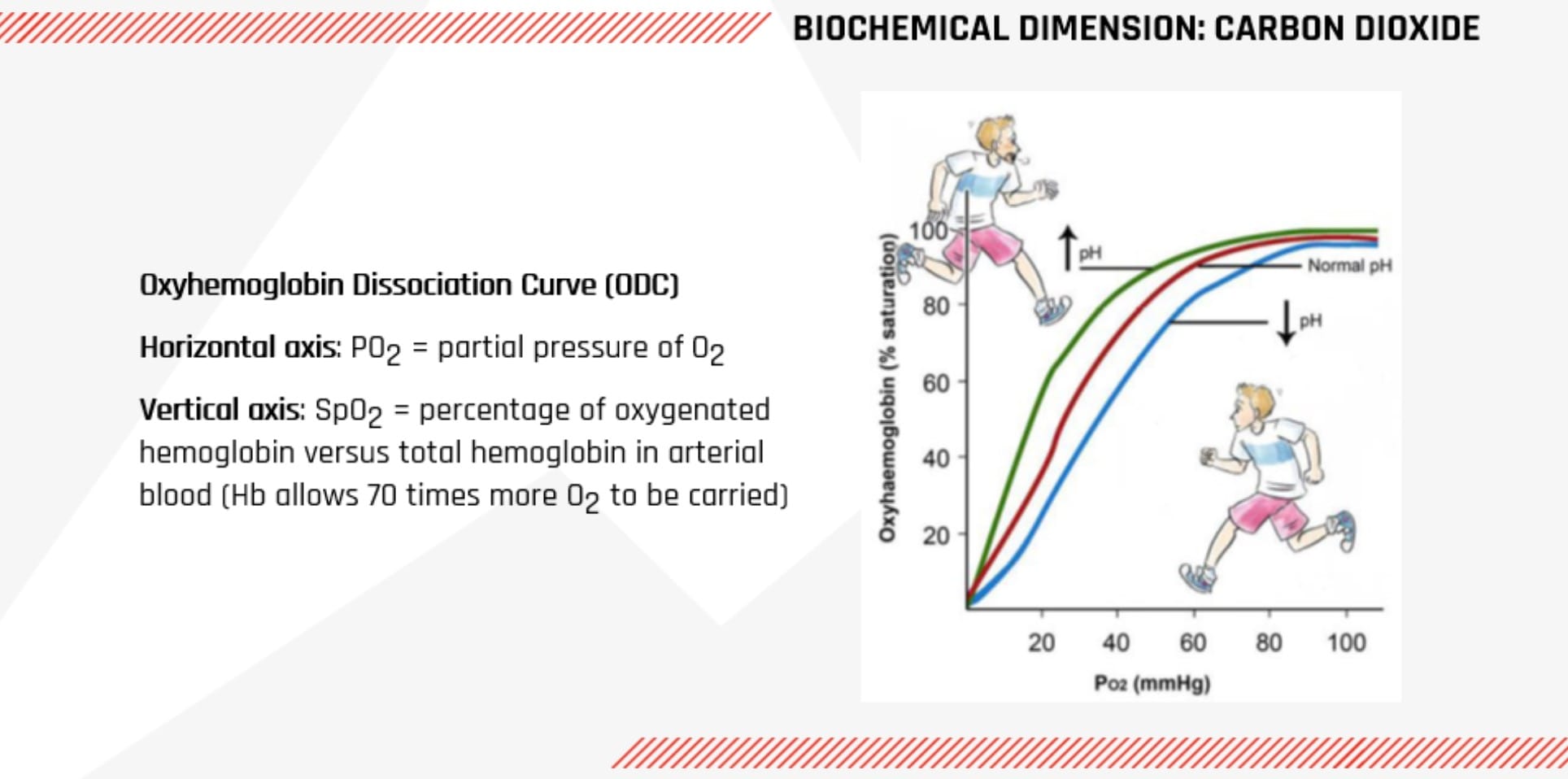
1. BIOCHEMICAL: CO2 and Blood pH
Supported by Russo et al., 2017, review of physiological effects of slow breathing
Your breathing volume directly determines CO2 levels in your blood. CO2 is produced at 200ml per minute in your mitochondria, where food (glucose, fats, and proteins) and oxygen meet. It's 24 times more blood soluble than oxygen and is transported three ways:
- 5% dissolved in plasma
- 30% combined with blood proteins
- 65% converted to bicarbonate ions
When you hyperventilate – that is when your breathing volume exceeds metabolic requirements – you remove too much CO2 from the blood, which increases pH and creates respiratory alkalosis. Even 30-60 seconds of acute hyperventilation causes major changes to respiratory CO2.
Chronic overbreathing causes the kidneys to dump bicarbonate along with minerals like magnesium and sodium in an effort to normalize blood pH. But bicarbonate is your buffer system for neutralizing pH changes. When you lose it, your resilience crashes. You feel like you're not getting enough breath, teetering on the brink of symptoms where small amounts of stress trigger panic.
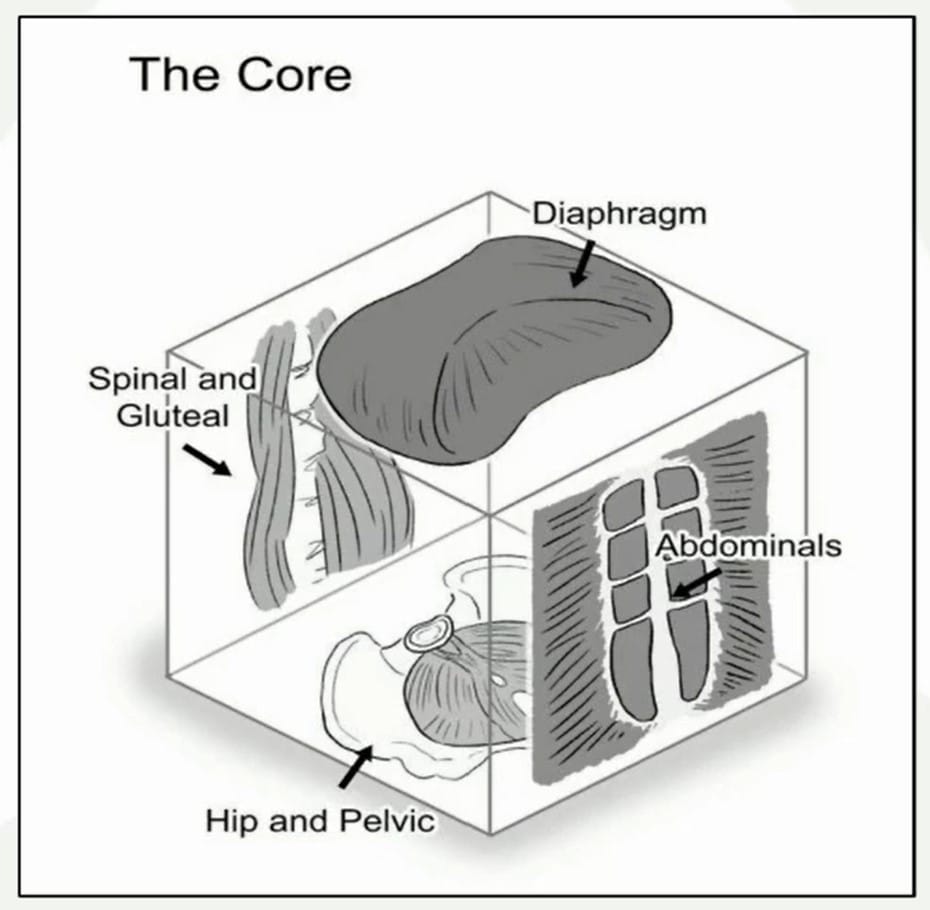
2. BIOMECHANICAL: Diaphragm Function and Movement
Supported by Kiesel et al., 2017 on screening for breathing pattern disorders in sports
The diaphragm is a thin sheet of muscle at the bottom of your ribs. During inhalation, it moves downward, creating negative pressure in the chest that draws air into the lungs. During exhalation, it returns to its resting domed position.
A functional breathing pattern shows:
- Most movement in the lower ribs
- Minimal movement in the upper chest
- Lateral expansion of the lower ribs on inhalation
- Natural pause at the end of exhalation
When breathing becomes shallow and confined to the upper chest, it's difficult to build intra-abdominal pressure (IAP), which is essential for spinal stabilization and core function. The body must then rely on back and neck muscles for support, leading to chronic pain and dysfunction.
Research shows that 50% - 60% of people with lower back pain have dysfunctional breathing patterns (Nathalie Roussel, 2009) Core muscle dysfunction correlates with musculoskeletal problems like lower back pain, neck pain, and Anterior Cruciate Ligament (ACL) injuries in the knee. Yet despite all we know about breathing function and core strength, medical professionals mostly overlook it.
The mechanisms of core control include both breathing and postural control, and are inextricably linked in the generation of intra-abdominal pressure. (IAP) When the muscles work in harmony, ideal intrabdominal pressure is generated to protect the lumbar spine (Hodges & Dandevia, 2000)
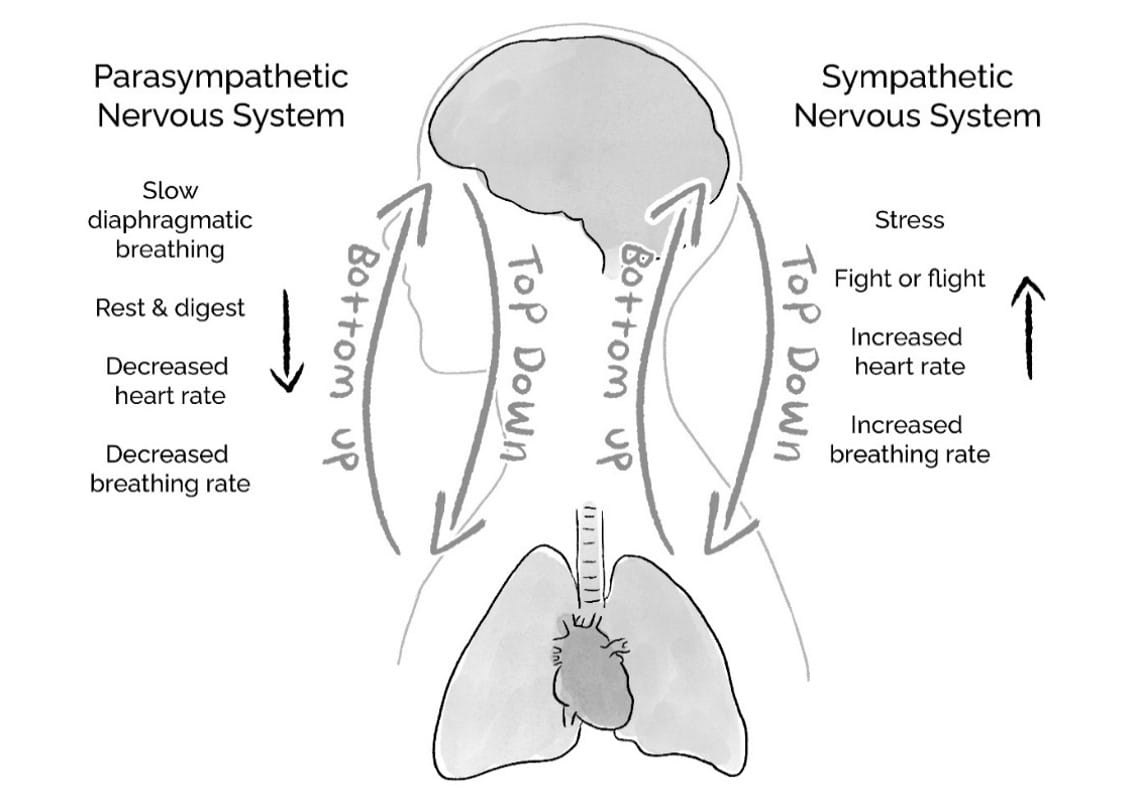
3. PSYCHOPHYSIOLOGICAL: Nervous System Balance
Supported by Zaccaro et al., 2018 systematic review on psychophysiological correlates of slow breathing
Your breath provides a direct gateway to your autonomic nervous system, allowing you to modulate internal states by maintaining parasympathetic-sympathetic balance.
Slow, diaphragmatic breathing stimulates the vagus nerve, which moderates parasympathetic nervous system activity. On exhalation, the vagus nerve secretes acetylcholine, slowing the heart rate and promoting the "rest and digest" response.
Slow breathing techniques (under 10 breaths per minute) increase heart rate variability (HRV) and respiratory sinus arrhythmia (RSA), suggesting strong parasympathetic nervous system involvement. Studies associated slow breathing with:
- Decreased anxiety
- Reduced stress
- Increased relaxation
- Improved emotional control
- Enhanced mood and vigor
- Better sleep quality
The same review found that slow breathing modulates central nervous system activity, increasing alpha brain waves (associated with relaxed alertness) and decreasing theta waves. This creates measurable improvements in psychological and behavioral outcomes.
YOUR BASELINE: THE BOLT SCORE
Before you can improve your breathing, you need to measure it. The Body Oxygen Level Test (BOLT) provides objective feedback in less than a minute.
How to measure your BOLT score:
- Take a normal, silent breath in through your nose
- Allow a normal, silent breath out through your nose
- Hold your nose with your fingers to prevent air from entering your lungs
- Count the number of seconds until you feel the first distinct desire to breathe
Notes:
- This is NOT a test of how long you can hold your breath
- Hold only until the first unmistakable urge to breathe (not when you're gasping)
- Don't push yourself
- The involuntary contraction of breathing muscles signals the end point
What your score means:
- Under 10 seconds: Severe dysfunction, high stress levels
- 10-20 seconds: Dysfunctional breathing pattern present
- 20-30 seconds: Moderate breathing function
- 30-40 seconds: Good breathing function
- 40+ seconds: Excellent breathing function
Research shows that the inability to hold the breath for more than 20 seconds generally indicates a breathing pattern disorder is present. Each 5-second improvement to your BOLT score increases blood flow to the brain and reduces sensitivity to CO2 accumulation.
🔬 PROOF OF WORK PROTOCOL
While you're stacking sats for the future, your body is operating on borrowed time if your breathing is dysfunctional. Standard health assessments never measure the metrics that matter most.
My functional health approach addresses what conventional medicine ignores:
- Mitochondrial function and energy production
- Autonomic nervous system balance
- Inflammatory markers and oxidative stress
- Breathing patterns and CO2 tolerance
- Movement quality and postural dysfunction
Whether carnivore didn't work for you, keto left you feeling off, or you're simply tired of one-size-fits-all approaches, there's a deeper investigation waiting. Let's map the data against the signals your body sends to create verification-based health optimization.
Functional labs allow a true trip into the rabbit hole with verifiable, comparable data. Upstream lifestyle interventions in breathing re-education, circadian biology and identification of your unique metabolic needs are the healthy habit stack that secure your health into the future.
BITCOIN PAYMENTS: 50% DISCOUNT ON ALL SERVICES (EXCLUDING LAB FEES)
Practical Breath Retraining: Exercises for Every Level
Knowledge without application remains theoretical. Here are proven exercises to retrain your breathing, arranged from simplest to most complex.
EXERCISE 1: Warm Up with Many Small Breath-HODLs
Objective: Gently prepare your body for air hunger while you HODL nitric oxide in the nasal cavity.
Suitable for: All persons, including those with high stress, asthma, panic disorder, and COPD
How to perform:
- Take a normal breath in and out through your nose
- Pinch your nose with your fingers to hold the breath for 5 seconds
- Release and breathe normally through your nose for 10 seconds
- Repeat this sequence 5-10 times
What's happening: As you hold your breath, nitric oxide pools inside the nasal cavity. When you breathe in after releasing, you carry this nitric oxide into the lungs where it opens airways and improves oxygen uptake.
Note: You should not feel stressed during this exercise. If 5 seconds creates too much air hunger, reduce to 3 seconds only.
When to use: This can also be used as an emergency exercise for asthma symptoms, panic attacks, hyperventilation, or high stress. For severe cases (BOLT under 10 seconds), repeat for 10 minutes every hour.
EXERCISE 2: Breathe Light (Biochemistry)
Objective: Normalize breathing biochemistry by reducing air volume and creating tolerable air hunger.
Suitable for: All except those with serious health conditions or first trimester pregnancy
Duration: 4 minutes minimum
How to perform:
- Posture: Sit upright in a chair or lie in a semi-supine (lying down with knees bent) position. Imagine a string gently pulling you toward the ceiling or the wall if your laying down. Feel the space between your ribs widening.
- Awareness: Close your mouth. Breathe normally through your nose. Observe your breath as it enters and leaves. Feel the slightly cooler air entering, slightly warmer air leaving. Use this as a measure of concentration—how long can you maintain attention on your breath before your mind wanders?
- Reduce volume: Take a slow breath in through your nose. Allow a slow, gentle, relaxed breath out. Slow down the speed of air entering and leaving. Breathe so lightly that the fine hairs within your nostrils barely move.
- Create air hunger: The goal is to feel a want or "hunger" for air—a feeling that you'd like to take a bigger breath. This tolerable air hunger signals you're reducing breathing volume toward normal.
- Don't restrict: Do not tense your stomach or deliberately hold your breath. Simply breathe softer, slower, and gentler than before.
- Maintain: Continue for 4 minutes. If air hunger becomes too strong, breathe normally for 30 seconds, then resume.
What's happening: By breathing less air than before, CO2 accumulates slightly in your blood. This improves oxygen delivery to cells and resets your body's tolerance to CO2.
EXERCISE 3: Breath-HODL Walking (5-10 Paces)
Objective: Combine breath retraining with physical movement.
Suitable for: All except those with serious medical conditions or pregnancy
How to perform:
- Stand and prepare to walk
- Take a normal breath in and out through your nose
- Hold your breath and walk 5-10 paces
- Stop walking, release your nose, breathe in through your nose
- Resume gentle breathing through your nose
- Wait 30-60 seconds and repeat
- Complete 5 repetitions
Progression: As your BOLT score improves, you can gradually increase the number of paces while holding your breath.
EXERCISE 4: Breath HODL While Walking (The Full Protocol)
Objective: This walking meditation combines all three dimensions of functional breathing while moving through space.
Best performed: In nature
Duration: 5-10 minutes minimum
The complete sequence:
A. POSTURE (Biomechanical Foundation)
Walk at a moderate pace with:
- Body upright (imagine that string pulling you toward the sky)
- Toes pointed forward
- Each small to medium step landing on the balls of your feet
- Weight supported on toes and outer edges of feet (not allowing them to collapse inward)
- Shoulders relaxed back and down (Tadasana spine)
- Head pointed directly ahead (not up or down). Look up and down only with your eyes.
- Space between ribs widening
B. AWARENESS (Psychophysiological Connection)
- Take attention from your mind and place it on your breath
- Feel the air entering and leaving your nose
- When your mind wanders (it will), gently bring attention back to your breath
- Use this as concentration practice
C. BIOCHEMISTRY (Light Breathing)
- Slow down the speed of air entering your nostrils
- Breathe so lightly that you create a tolerable hunger for air
- Feel that you'd like to take a bigger breath, but don't
- Breathe softly enough that fine hairs in your nostrils barely move
Optional: Block one nostril (increases difficulty)
- Press a finger against one nostril to create resistance
- This naturally increases air hunger and forces slower breathing
- Switch nostrils halfway through or keep the same one blocked
- Walk for 2-3 minutes this way
D. BIOMECHANICS (Diaphragm Engagement)
- Check in from time to time by placing your hands on your lower ribs
- As you breathe in, feel your ribs moving outward
- As you breathe out, feel your ribs moving inward
- Breathe light, slow, and deep:
- Light: Less air than normal (tolerable hunger)
- Slow: Fewer breaths per minute
- Deep: Fuller breaths using the DIAPHRAGM (lateral rib expansion)
Integration points to remember:
- The objective is NOT to breathe deeply in the upper chest
- Instead, create intra-abdominal pressure that pushes the lower ribs outward
- Maintain nose breathing throughout (mouth closed)
- If you lose focus, return attention to the breath
- This is meditation in motion
Final reminder: Breathe light, slow, and deep during your walk. Feel a tolerable air hunger. Reduce breaths per minute. Feel lateral rib expansion on inhalation.
Continue for 5-30 minutes daily depending on your level of health and BOLT score. This single practice addresses biochemical, biomechanical, and psychophysiological dimensions simultaneously.
The Bigger Picture: Why This Matters
Back in 1988, the normal respiratory rate was medically accepted to be around 12 breaths per minute. Now it's considered to be 16. What changed in 40 years? Chronic stress, environmental toxins, EMF exposure, blue light pollution, and the erosion of natural living patterns.
Your breathing reflects the accumulated stress of modern life. Every stressor, every compromised night of sleep, every hour under artificial light compounds the dysfunction.
But here's the empowering part: breathing is one of the few autonomic functions you can consciously control. Unlike your heartbeat or digestion, you can directly intervene in your respiratory patterns. With consistent practice, you can retrain your breathing reflexes, reset your CO2 tolerance, restore diaphragm function, and rebalance your nervous system.
The Zaccaro research linked to earlier, summarized it perfectly: "Slow breathing techniques enhance interactions between autonomic, cerebral and psychological flexibility, linking parasympathetic and CNS activities related to both emotional control and well-being."
Every five-second improvement to your BOLT score represents measurable increases in blood flow to the brain, reduced anxiety, improved sleep, and better oxygen delivery to every cell in your body.
You wouldn't trust your Bitcoin to a third party without verification. Why trust your breathing patterns to unconscious habits developed under chronic stress?
Don't trust. Verify.
Measure your BOLT score weekly. Track your progress. Feel the difference in energy, mental clarity, sleep quality, and stress resilience.
🔬 READY TO GO DEEPER?
Breath retraining is just one pillar of the Sleuth Wellness approach. True health optimization requires investigating:
- How your unique mitochondrial function responds to light exposure
- Your body's specific inflammatory response patterns
- Detoxification pathway efficiency
- Nutritional needs based on epigenetics and bio-individuality
- Environmental toxin burden and EMF sensitivity
- Tongue posture and its impact on airway and facial development
My functional health services go beyond standard blood panels to reveal the data that actually matters. Together, we'll map functional lab results against the signals your body sends, avoiding the trap of "treating the paper" while ignoring your lived experience.
Whether you're dealing with persistent issues that carnivore or keto didn't solve, or you're ready to optimize beyond what you thought possible, the investigation starts with verification.
Functional labs don't lie. They show you exactly where your system is under-performing and what needs attention.
BITCOIN PAYMENTS: 50% DISCOUNT ON ALL SERVICES (EXCLUDING LAB FEES)
The Bottom Line
You already understand proof of work. You already value verification over trust. You already know that the mainstream narrative often hides the most important information.
Apply that same rigor to your health.
Your breathing might be the single most overlooked aspect of your wellbeing, yet it affects everything: energy production, oxygen delivery, nervous system balance, core stability, pain tolerance, sleep quality, mental clarity, and emotional regulation.
You have a finite amount of breaths in the course of of your lifespan. Talk about scarce! Always HODL the scarcest assets by stacking the healthiest habits.
The exercises in this newsletter cost nothing. They require no equipment. They can be done anywhere, by anyone, at any fitness level.
Start with measuring your BOLT score. Practice the warm-up breath-holds when stressed. Implement the walking meditation protocol at least three times per week.
Then watch as your score improves, your symptoms reduce, and your energy increases.
Self-custody your wellness the same way you self-custody your bitcoin. With proof of work, verification, and unwavering commitment to truth over convenience.
HODL thy breath, and let your health compound over time.
Note: This newsletter is for educational purposes only and is not intended to diagnose, treat, or cure any medical condition. Always consult with qualified healthcare providers regarding any health concerns.
Rabbit Hole Health © 2025
A Sleuth Wellness Newsletter
Breath HODLing? Embracing UV light? Reducing EMF? Mitochondrial, HPA-Axis and gut function? Tongue posture?! I think you're onto something...